What’s the difference between tree crown lifting and crown reduction?
If you’ve been advised that your tree needs some attention, you may have come across terms like crown lifting and crown reduction. While they might sound similar, they serve very different purposes—and choosing the right approach can make a big difference to the health, safety, and appearance of your tree.
So what is the difference between crown lifting and crown reduction? In this blog, we will provide a clear breakdown to help you understand what each involves and when they are typically used.
What is Crown lifting?
Crown lifting is the process of removing the lower branches of a tree’s canopy (its “crown”) to increase the clearance between the ground and the lowest branches.
This is often carried out to:
- Improve access for pedestrians, vehicles, or machinery
- Allow more light into a garden or property
- Prevent branches from obstructing paths, roads, or driveways
- Improve visibility, for example near road junctions
Rather than altering the overall size of the tree, crown lifting simply raises the height of the canopy. The shape and structure of the upper crown remain largely unchanged.
A careful approach is important—removing too many lower branches at once can affect the tree’s balance and long-term health. We would always advise having this carried out by professional tree surgeons. Qualified and experienced arborists will know how to effectively crown raise a tree to achieve the intended outcome, whilst supporting the health and balance of the tree.
What is crown reduction?
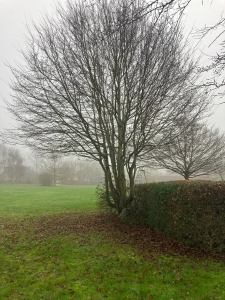
Crown reduction involves reducing the overall size of the tree’s canopy by shortening the outer branches. This is done by selectively cutting back to suitable growth points, maintaining the tree’s natural shape.
It’s commonly used to:
- Reduce the height or spread of a tree
- Manage trees that have outgrown their space
- Minimise the risk of branch failure in exposed areas
- Reduce shading or encroachment over buildings
Unlike crown lifting, crown reduction affects the entire canopy and requires skilled pruning to ensure the tree remains healthy and structurally sound. Again, as with any tree surgery work, you’re always best consulting a professional tree surgeon or tree surgery company to carry out the work.
Key differences at a glance
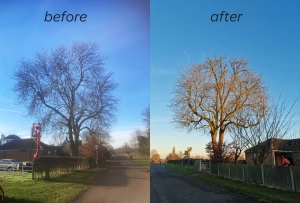
- Crown lifting removes lower branches to raise clearance
- Crown reduction reduces the overall size of the canopy
- Crown lifting improves access and light at ground level
- Crown reduction manages size, safety, and spread
Which one does your tree need?
The right approach depends on your goals and the condition of the tree. For example:
- If branches are hanging too low over a driveway or garden, crown lifting is usually the best option
- If a tree has become too large or is causing concern near buildings, crown reduction may be more appropriate
In some cases, a combination of both techniques can be used to achieve the desired result.
A final thought
Tree work is as much about long-term care as it is about immediate results. Both crown lifting and crown reduction should be carried out with an understanding of the tree species, its growth habits, and its surroundings.
If you’re unsure what your tree needs, getting professional advice ensures the work is done safely and in a way that supports the tree’s health for years to come. At Simpson Arboriculture, our team are fully qualified and experienced, making us a great choice to carry out your next tree work project.
If you would like guidance on the best approach for your trees, you can get in touch with us via our website. We would be happy to arrange for one of our team to come out and discuss the work with you.