Tag Archive for: crown reduction

If you have ever received a quotation for tree work, you may have come across terms such as crown reduction, crown lifting, crown thinning or pollarding.

These are different methods of pruning a tree, each carried out for a particular reason. Although some of the terms sound similar, they can have very different effects on the size, shape and future management of a tree.

Understanding the terminology can make it much easier to know what work is being recommended and what your tree is likely to look like afterwards.
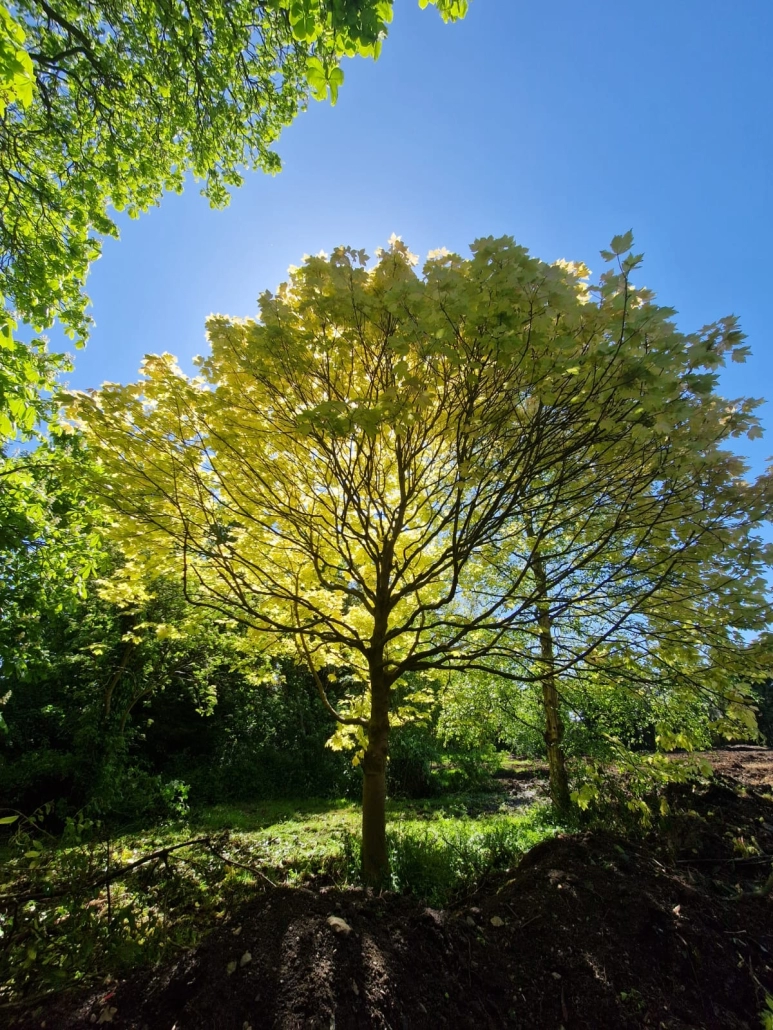
Summer pruning of tree

What is the crown of a tree?

Before looking at the different types of pruning, it helps to understand what arborists mean by the crown.

The crown is the upper part of the tree made up of its branches, twigs and foliage. Different pruning operations alter different parts of this crown depending on what needs to be achieved.

What is a crown reduction?

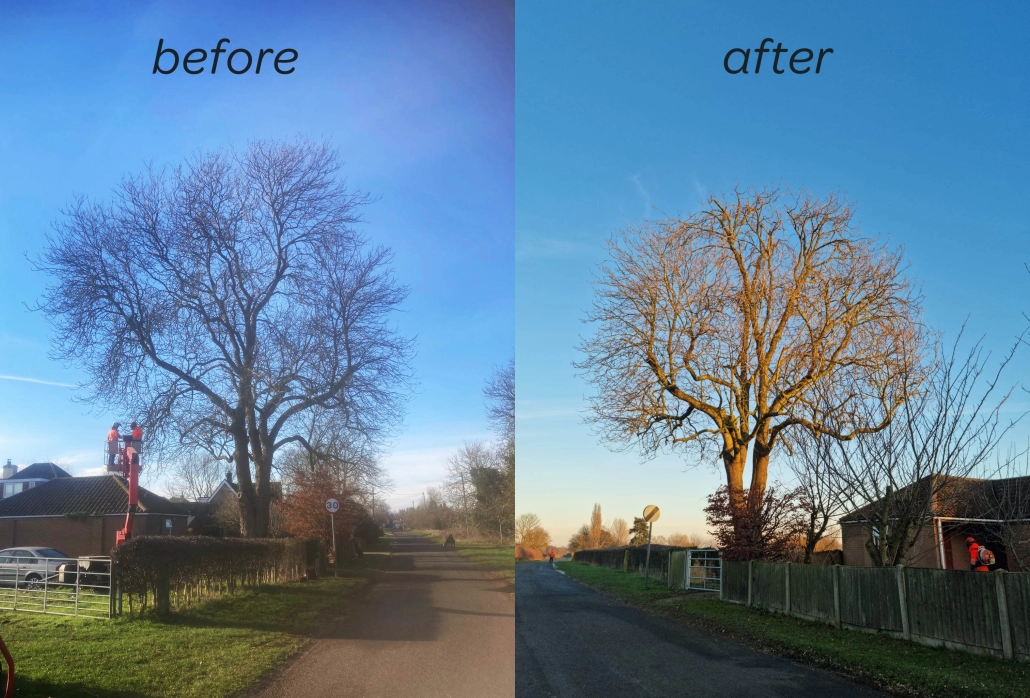
A crown reduction reduces the overall height and/or spread of a tree’s crown.

Rather than simply cutting branches back to the same level, selected branches are shortened to suitable growth points throughout the crown. The aim is to produce a smaller tree while retaining a natural, balanced shape.

A crown reduction may be recommended where a tree has become too large for its surroundings, where branches are extending towards buildings or other features, or where there is another arboricultural reason for reducing the size of the crown.

The amount of reduction should normally be clearly specified. For example, a quotation might describe a reduction in metres rather than simply stating that the tree will be “cut back”.

A properly carried out crown reduction requires careful pruning and consideration of the tree’s species, condition, structure and ability to respond to the work. Arboricultural Association standards for approved contractors specifically assess appropriate crown-reduction specifications, correct pruning cuts and the finished result.
What is a crown lift?

A crown lift, sometimes called crown raising, involves removing selected lower branches from a tree to increase the clearance between the ground and the bottom of the crown.

It does not mean reducing the height of the tree.

Crown lifting can be useful where low branches are obstructing a driveway, footpath, road, building or garden area. It can also make it easier to walk, mow or work underneath a tree and can allow more space beneath the canopy.

The work should be carefully considered, particularly on mature trees. Removing large lower limbs can create significant wounds and alter the structure of the tree, so it is not simply a case of removing every branch below a certain height.

A specification may therefore state the clearance that needs to be achieved, for example lifting the crown to a particular height above ground level.
What is crown thinning?

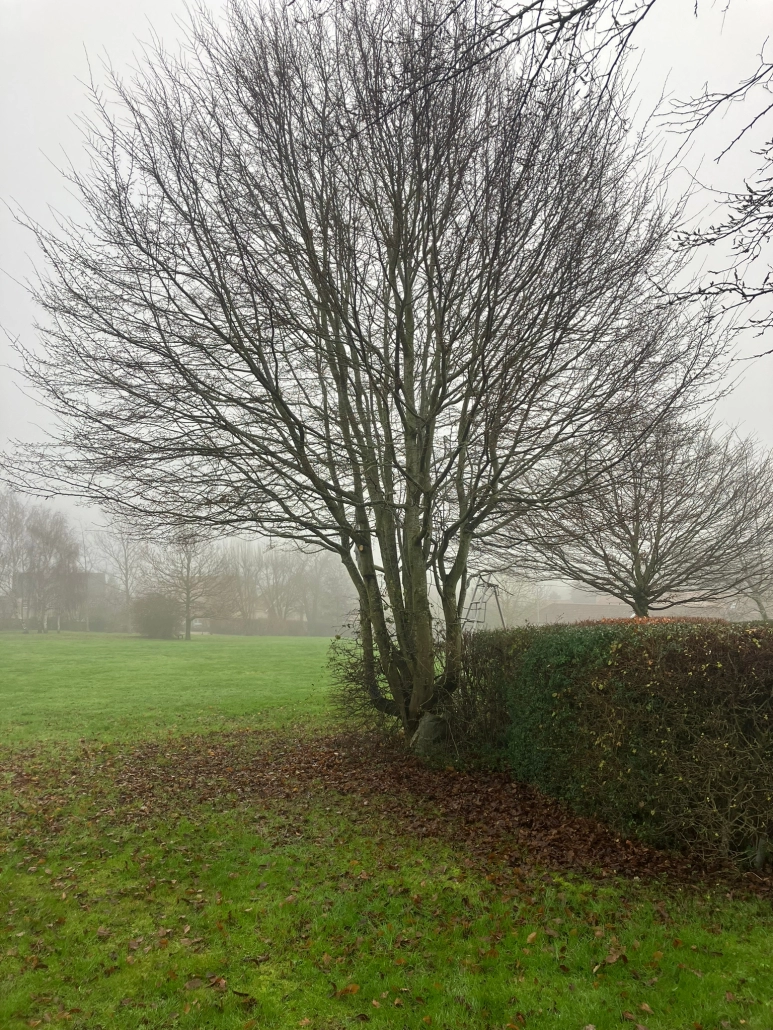
Crown thinning involves selectively removing a proportion of smaller branches throughout the crown while retaining its overall size and shape.

Unlike a crown reduction, crown thinning is not intended to substantially reduce the height or spread of the tree.

Instead, the aim is to reduce the density of branches within the crown. Depending on the tree and the reason for the work, this can increase light penetration and improve the distribution of branches throughout the canopy.

Crown thinning is usually expressed as a percentage so that the amount of growth to be removed is clearly defined. Arboricultural Association guidance for approved contractors describes thinning as a uniform operation carried out primarily towards the outer crown.

It is important not to remove too much foliage. Excessive or poorly distributed thinning can negatively affect the appearance and structure of a tree rather than improving it.

What is pollarding?

Pollarding is quite different from a standard crown reduction.

It is a method of managing certain trees by repeatedly cutting back branches to established points, encouraging new shoots to grow from these areas. Over time, distinctive swollen points known as pollard heads can develop.

Pollarding can be used to restrict the ultimate size of suitable trees and has traditionally been used to manage many street and landscape trees. Once a pollarding cycle has been established, the tree will usually require ongoing periodic management.

Importantly, pollarding is not simply another word for heavily cutting back a tree or “topping” it.

Whether pollarding is suitable depends on factors including the species, age, condition and previous management of the tree. Starting a new pollarding regime on an established tree is very different from maintaining a tree that has already been managed as a pollard for many years.

Which type of pruning does my tree need?

There isn’t one type of pruning that is suitable for every tree.

For example:

  • If a tree has become too large for the available space, a crown reduction may be considered.
  • If lower branches are causing an obstruction, a crown lift may be appropriate.
  • If the aim is to selectively reduce the density of the crown without significantly changing its overall dimensions, crown thinning may be recommended.
  • If a suitable tree is already managed on a regular pollarding cycle, pollarding may be required to maintain it.

In some situations, pruning may not be necessary at all, or a different type of tree work may be more appropriate.

This is why we assess the individual tree and its surroundings before recommending work. Species, age, condition, location, previous pruning and the reason for carrying out the work should all be taken into consideration.
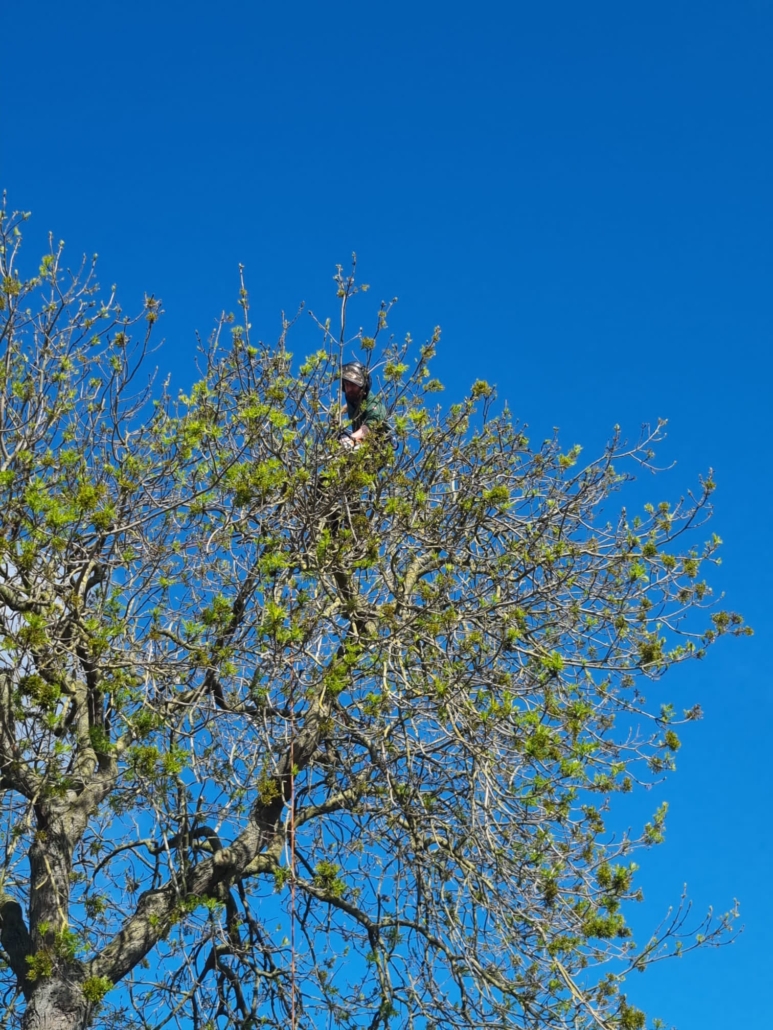
Clear tree work specifications matter

Terms such as “trim the tree”, “cut it back” or “take some off the top” can mean very different things to different people.

A clear tree work specification helps both the customer and the arborist understand exactly what is going to be carried out. Where appropriate, this could include the type of pruning, the amount to be removed and the intended finished result.

At Simpson Arboriculture, we aim to carry out pruning work in accordance with BS 3998: Recommendations for Tree Work where applicable. As an Arboricultural Association ARB Approved Contractor, our work, knowledge and procedures are independently assessed as part of the scheme. 

If you are unsure what type of work your tree requires, we can assess the tree and recommend an appropriate course of action.

We provide professional tree surgery services for domestic and commercial customers throughout Lincolnshire and for larger projects, further afield. You can get in touch with us at Simpson Arboriculture via our website. Our friendly team would be happy to discuss options with you and arrange a free quotation for your tree work.
If you’ve been advised that your tree needs some attention, you may have come across terms like crown lifting and crown reduction. While they might sound similar, they serve very different purposes—and choosing the right approach can make a big difference to the health, safety, and appearance of your tree.

So what is the difference between crown lifting and crown reduction? In this blog, we will provide a clear breakdown to help you understand what each involves and when they are typically used.

What is Crown lifting?

Crown lifting is the process of removing the lower branches of a tree’s canopy (its “crown”) to increase the clearance between the ground and the lowest branches.

This is often carried out to:

  • Improve access for pedestrians, vehicles, or machinery
  • Allow more light into a garden or property
  • Prevent branches from obstructing paths, roads, or driveways
  • Improve visibility, for example near road junctions

Rather than altering the overall size of the tree, crown lifting simply raises the height of the canopy. The shape and structure of the upper crown remain largely unchanged.

A careful approach is important—removing too many lower branches at once can affect the tree’s balance and long-term health. We would always advise having this carried out by professional tree surgeons. Qualified and experienced arborists will know how to effectively crown raise a tree to achieve the intended outcome, whilst supporting the health and balance of the tree.

What is crown reduction?

Crown reduction involves reducing the overall size of the tree’s canopy by shortening the outer branches. This is done by selectively cutting back to suitable growth points, maintaining the tree’s natural shape.

It’s commonly used to:

  • Reduce the height or spread of a tree
  • Manage trees that have outgrown their space
  • Minimise the risk of branch failure in exposed areas
  • Reduce shading or encroachment over buildings

Unlike crown lifting, crown reduction affects the entire canopy and requires skilled pruning to ensure the tree remains healthy and structurally sound. Again, as with any tree surgery work, you’re always best consulting a professional tree surgeon or tree surgery company to carry out the work.

Key differences at a glance

  • Crown lifting removes lower branches to raise clearance
  • Crown reduction reduces the overall size of the canopy
  • Crown lifting improves access and light at ground level
  • Crown reduction manages size, safety, and spread

Which one does your tree need?

The right approach depends on your goals and the condition of the tree. For example:

  • If branches are hanging too low over a driveway or garden, crown lifting is usually the best option
  • If a tree has become too large or is causing concern near buildings, crown reduction may be more appropriate

In some cases, a combination of both techniques can be used to achieve the desired result.

A final thought

Tree work is as much about long-term care as it is about immediate results. Both crown lifting and crown reduction should be carried out with an understanding of the tree species, its growth habits, and its surroundings.

If you’re unsure what your tree needs, getting professional advice ensures the work is done safely and in a way that supports the tree’s health for years to come. At Simpson Arboriculture, our team are fully qualified and experienced, making us a great choice to carry out your next tree work project.

If you would like guidance on the best approach for your trees, you can get in touch with us via our website. We would be happy to arrange for one of our team to come out and discuss the work with you.

Ash tree

Today, we are addressing a common query among our customers: What’s the difference between tree pollarding and crown reduction? These two pruning techniques may sound similar, but they serve distinct purposes in maintaining the health and aesthetics of a tree. Let’s shed some light on when and why each method could be undertaken.

Understanding tree pollarding

Tree pollarding is a specific pruning technique that involves the removal of all branches and stems of a tree back to the trunk. This severe form of pruning results in a compact head of branches, often referred to as a ‘Pollard head’. We would typically carry this out above the ground depending on the size of the tree.

  • Aesthetic control: We may carry out tree pollarding to control the size and shape of a tree. This can be especially useful in urban areas with limited space.
  • Long term maintenance: When carried out correctly, pollarding can extend the lifespan of certain tree species. It encourages the growth of a dense network of young shoots, which can reduce the risk of disease and decay.
  • Urban adaptation: We also may choose pollarding as an option to manage a tree’s size and shape within the confines of urban environments, thus preventing interference with power lines and buildings.

Understanding crown reduction

Crown reduction on the other hand, is a less radical approach to tree pruning. This technique involves selectively reducing the height and spread of a tree’s crown while maintaining its natural shape.

  • Canopy reduction: Crown reduction focuses on removing specific branches to decrease the overall size of a tree’s canopy. We often employ this method to address issues such as crowding, light obstruction or proximity to structures
  • Health improvement: Crown reduction can enhance a tree’s overall health by eliminating dead or diseased branches. This allows for better air circulation and sunlight penetration, promoting a healthier, more resilient tree
  • Aesthetic appeal: After discussion with a customer, we commonly choose this approach for its ability to maintain the natural form of a tree while addressing issues related to size and structure

Choosing the right technique

The decision between tree pollarding and crown reduction depends on various factors, including the tree species, its location and the aims and objectives of the work. Consulting with a professional and experienced arborist, such as our team at Simpson Arboriculture, is crucial. We can assess your tree and suggest appropriate action which will both achieve the customers’ aims and support the health and longevity of the tree. We specialise in carrying out tree work to ‘British Standard BS3998: 2010 Tree Work- recommendations’.

Conclusion

In the world of arboriculture, understanding the distinctions between tree pollarding and crown reduction is key to making informed decisions about the maintenance of your trees. Whether you’re looking to control size, improve aesthetics or enhance the health of your trees, Simpson Arboriculture is here to help! We can provide expert advice and professional services tailored to meet the needs of your trees. You can get in touch with us in the office or via our by submitting an enquiry on our website.