Tree work has traditionally relied heavily on skilled manual work – and there are still plenty of situations where traditional arboricultural methods are the right approach. However, specialist machinery can completely change the way we carry out certain projects.
Our continued investment in machinery allows us to undertake work that would otherwise be slower, more labour-intensive or more difficult using conventional methods alone. From grapple-saw dismantling and whole-tree chipping to harvesting, forwarding, mulching and timber haulage, the right combination of machinery and experienced operators can make a significant difference to how efficiently and safely a job progresses.
But for us, it isn’t simply about owning the machines. What matters is the capability they give our team – and knowing when, where and how to use them effectively.
Why mechanise tree work?
Every site and every tree presents a different set of challenges. Before starting work, we consider the safest and most efficient way to complete the job, taking into account factors such as access, tree condition, terrain, surrounding infrastructure, the volume of material and what needs to happen to that material afterwards.
Where appropriate, machinery can help us to:
- Reduce manual handling and physical demands on our arborists
- Keep people further away from dangerous or unstable trees
- Process large quantities of timber and brash efficiently
- Complete larger-scale projects within practical timescales
- Reduce the number of separate contractors required on site
- Manage more stages of a project ourselves
- Maintain greater control over how work progresses from start to finish
The result isn’t simply “bigger machines”. It’s a different way of approaching the work.
Keeping our arborists safer
Safety is one of the most important reasons for using machinery.
Tree surgery will always involve an element of risk, but mechanisation can reduce the amount of time our arborists need to spend climbing, handling heavy timber manually or working in close proximity to hazardous trees.
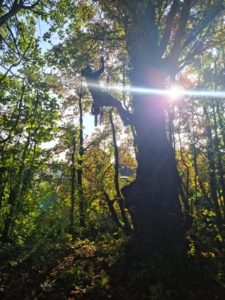
Our Hinowa MEWP, for example, provides a working height of up to 20 metres and can give our arborists an alternative to climbing. This can be particularly valuable when working on dead, dying or structurally compromised trees, including trees affected by ash dieback.
Dead timber can be brittle, unpredictable and structurally unstable. Using a MEWP allows an arborist to work from a platform rather than relying on the tree itself for support. It can also be an efficient option where branches are difficult to reach or where a tree offers limited suitable anchor points for climbing.
On other sites, machinery can take the arborist out of the tree altogether.
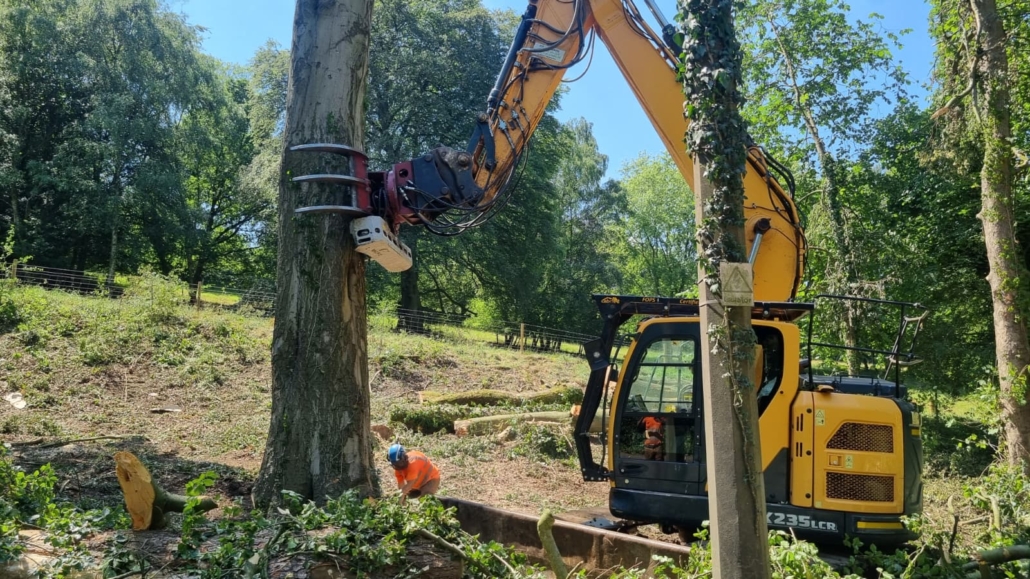
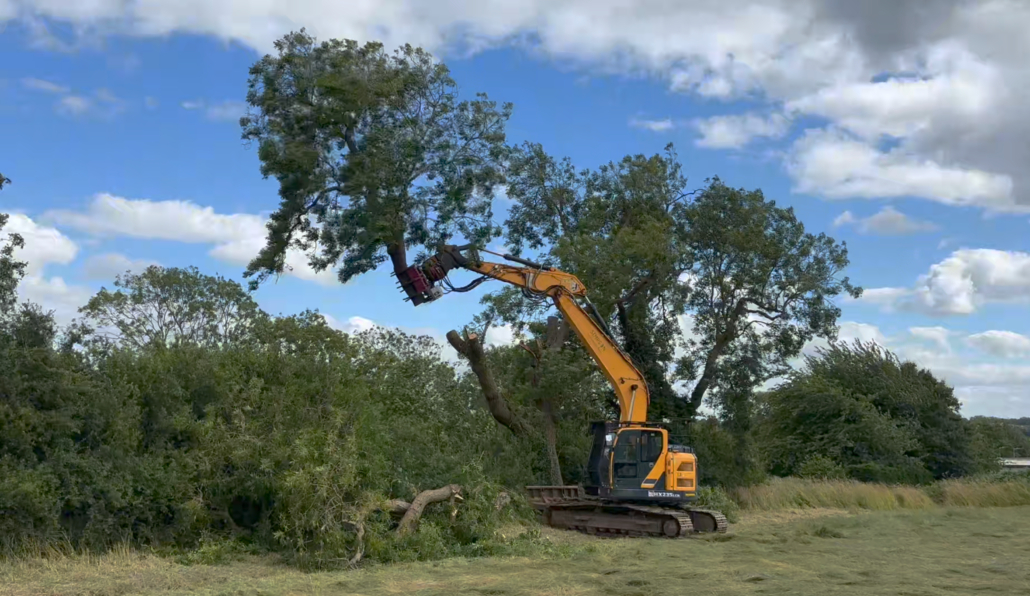
Our Hyundai 360 excavator fitted with a Vosch 4000 grapple saw allows sections of a tree to be held, cut and moved mechanically. We have used this combination when removing dangerous roadside trees growing on a slope – a situation where terrain, tree condition and proximity to the road all needed to be carefully managed.
Rather than looking at mechanisation purely in terms of speed, its ability to reduce exposure to risk is just as important.
Making large and complex projects more efficient
Once a tree is on the ground, there can still be a considerable amount of work involved in processing and removing the resulting material.
This is where having machinery for different stages of a project becomes particularly useful.
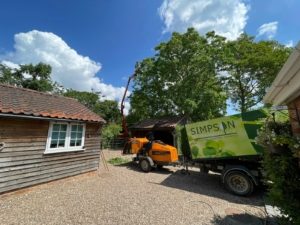
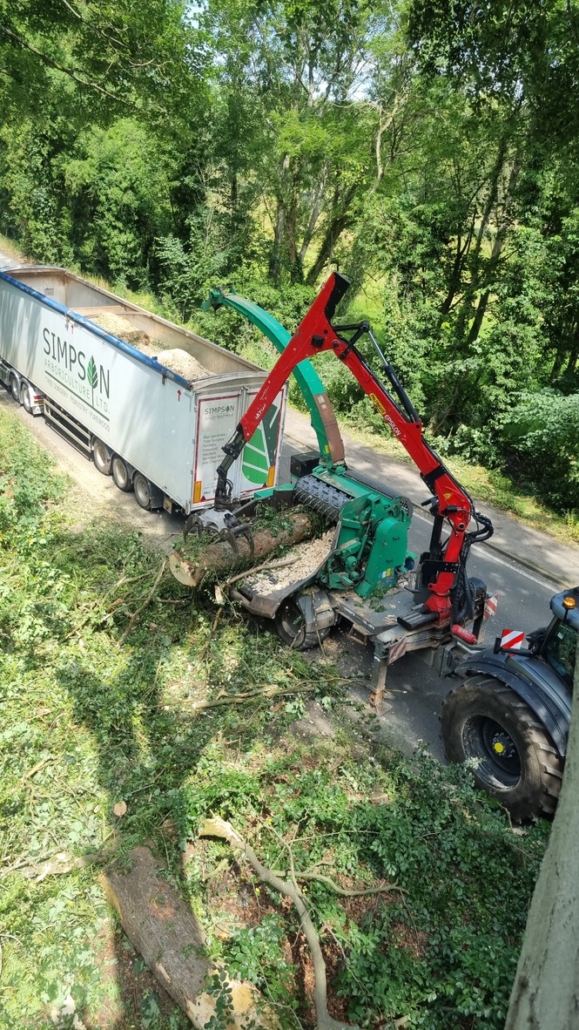
During the roadside tree removal work mentioned above, our Jenz crane-fed chipper was used to process the resulting material. The chip was fed directly into a walking-floor trailer ready to be transported away from site.
Being able to combine machinery in this way creates an efficient workflow: trees can be dismantled mechanically, material processed and the resulting timber or woodchip moved onwards without unnecessary additional handling.
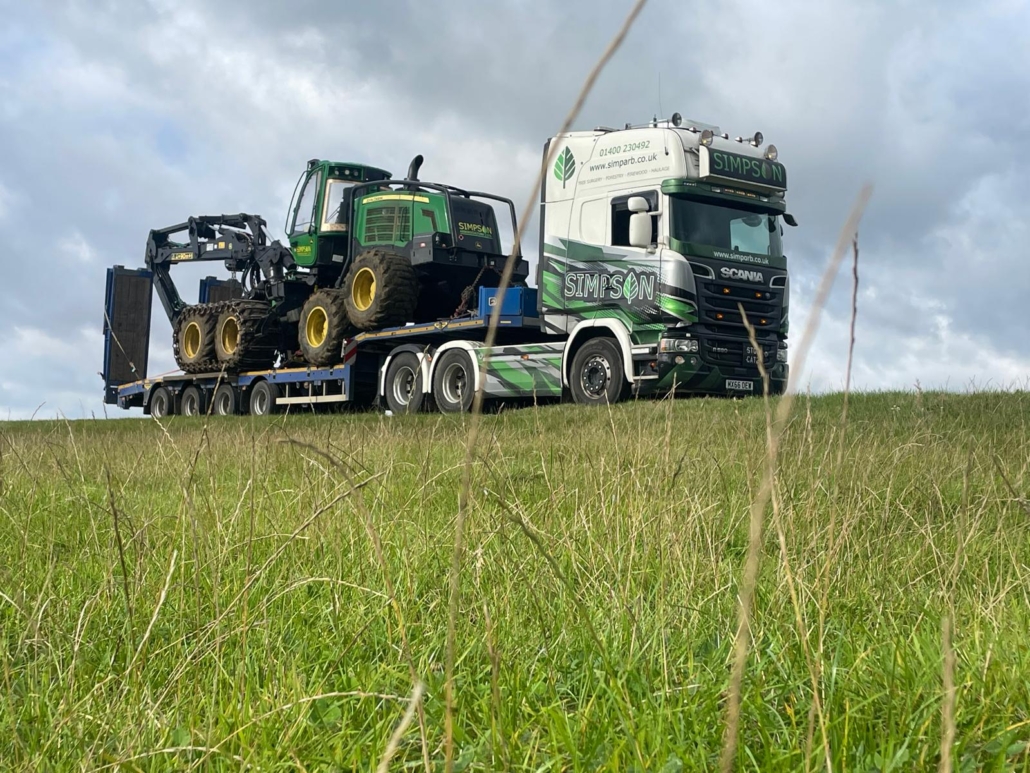
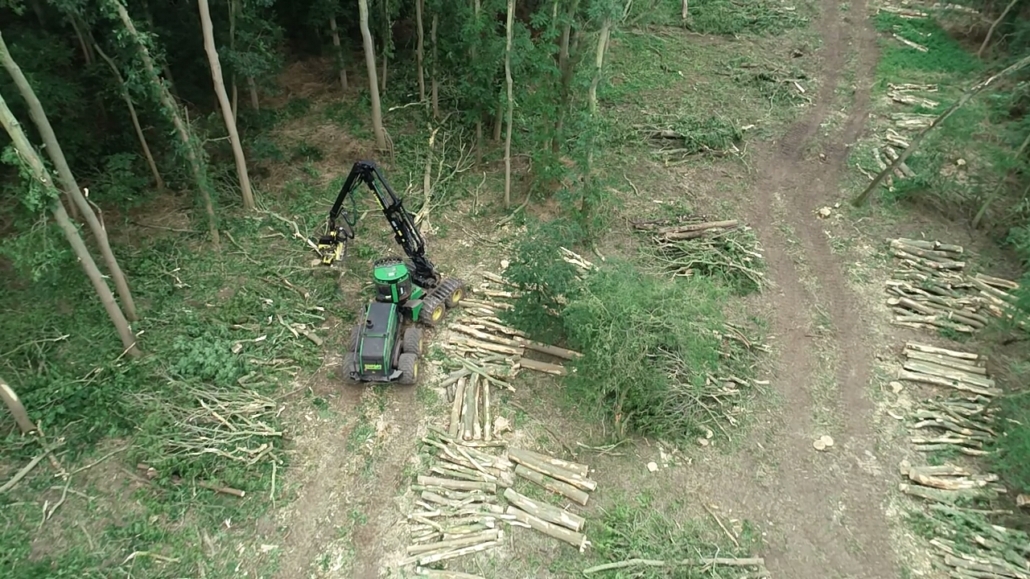
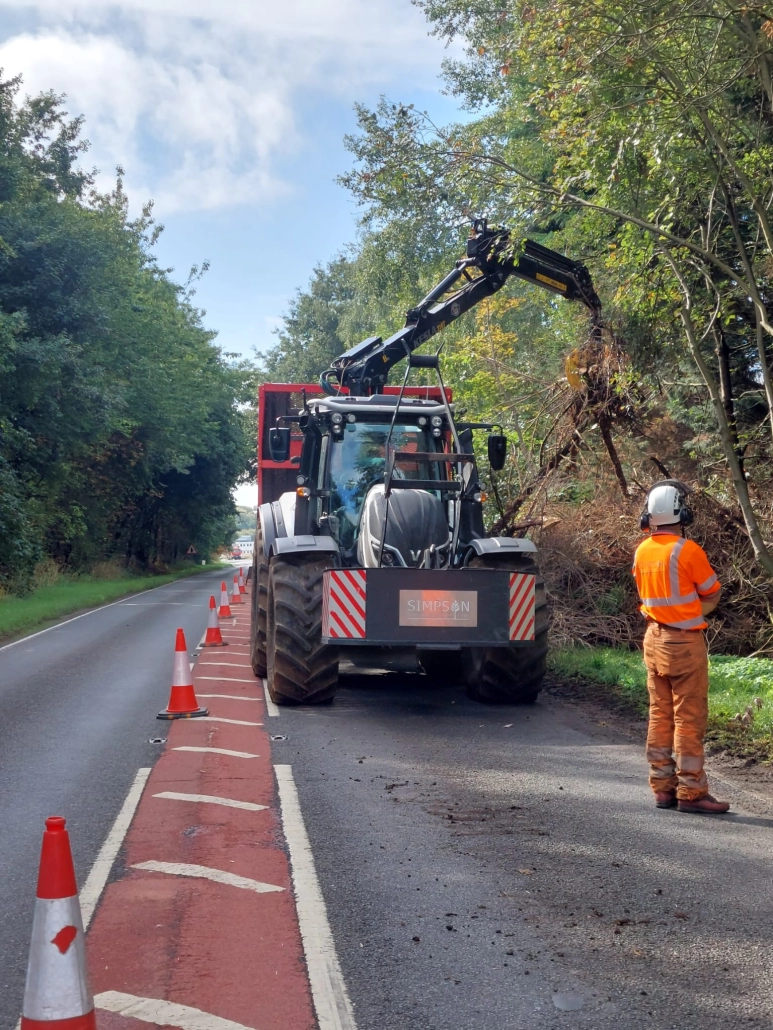
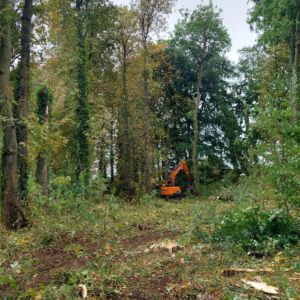
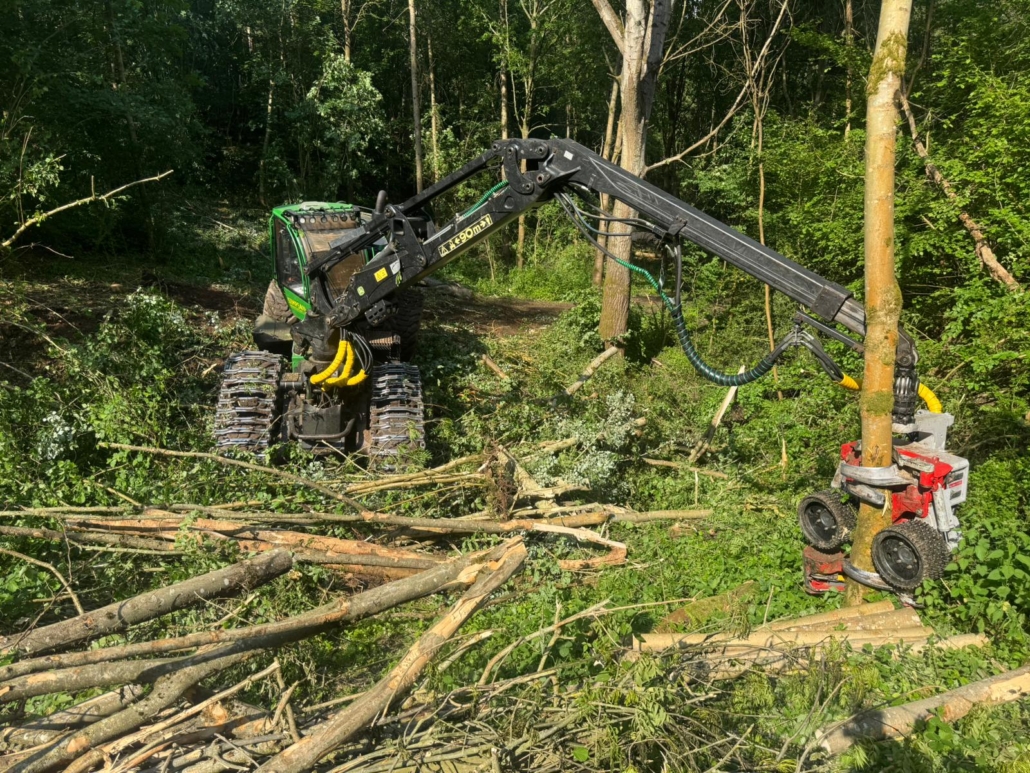
For forestry work, our John Deere harvester and forwarder allow us to mechanically fell, process and extract timber. Our Valtra tractor with timber crane and trailer gives us further capability for moving timber and other material from a wide variety of sites.
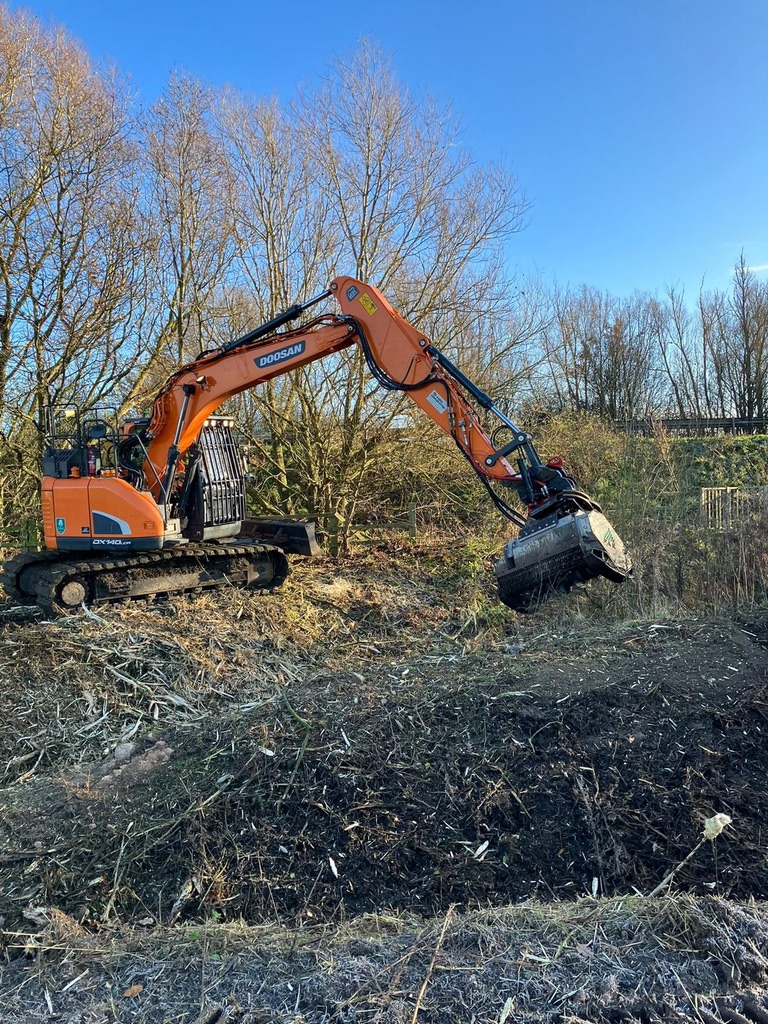
Where large areas need to be cleared, mulching equipment can process vegetation efficiently across the site, making it particularly useful for larger-scale clearance projects.
We also operate our own HGV for a range of haulage, enabling us to transport timber arising from domestic, commercial and forestry work.
Together, these capabilities mean we can consider the whole process – not just how a tree will be felled, but how the material will be processed, extracted and transported afterwards.
Machinery isn’t only for large-scale jobs
Heavy machinery might immediately bring forestry or major commercial projects to mind. However, mechanisation can be useful across a much wider range of work.
Depending on the site, we may use machinery on domestic tree work, commercial projects, forestry operations, site clearances, roadside work and sites with challenging terrain or access.
Equally, using machinery doesn’t automatically make it the right choice.
Sometimes climbing and traditional arboricultural techniques remain the safest and most practical solution. On another site, bringing in a MEWP, excavator or specialist forestry equipment could significantly reduce manual handling and make the work much more efficient.
The important part is choosing the method to suit the job.
More than the machines themselves
Our machinery is only one part of our capability.
Getting the most from specialist equipment relies on the knowledge and experience of the people planning the work and operating it. A machine is useful when it solves a problem – whether that’s keeping an arborist away from an unstable tree, processing a high volume of material, working safely on difficult terrain or reducing unnecessary handling.
By combining experienced arborists, skilled machine operators and specialist equipment, we can look at a project as a whole and decide on an approach that makes the best use of the resources available.
That might involve traditional climbing techniques, mechanised tree removal, harvesting and forwarding, crane-fed chipping, mulching, timber haulage – or a combination of several methods.
Ultimately, that’s why we invest in machinery: not simply to have more equipment, but to give our team more options.
More options allow us to plan work around the individual site, reduce unnecessary risk and manual handling, and complete everything from smaller tree surgery jobs to complex commercial and forestry projects safely and efficiently.
Get in touch
If you’re interested in finding out more about what we can do to assist with your next project, you can get in touch via our website. Our team would be happy to discuss your needs and arrange for a free site visit and quotation.