Trees are an important part of our gardens, parks and landscapes. They provide shade, privacy, wildlife habitat and can add significant value to a property. However, like any living organism, trees can develop problems that may make them unsafe.
A dangerous tree does not always look obviously unhealthy. In some cases, a tree can appear perfectly normal while hidden defects weaken its structure. Understanding the warning signs can help you identify potential issues before they become a serious risk.
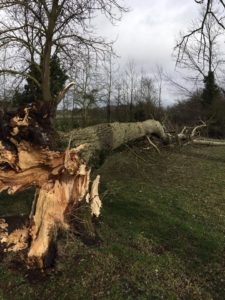
What makes a tree dangerous?
A tree may be considered dangerous when it has a higher likelihood of failure and could cause injury or damage if it falls or loses branches.
The level of risk depends on several factors, including:
- The condition of the tree
- The size of the tree or branches
- The likelihood of failure
- Nearby targets such as buildings, vehicles, roads or footpaths
- Weather conditions and exposure to strong winds
Not every defect means a tree is dangerous, but certain signs should never be ignored.
Common signs that a tree may be dangerous
Dead or dying branches
One of the most obvious warning signs is the presence of dead branches, particularly large limbs high in the canopy.
Dead wood can become brittle and may fall without warning, especially during windy weather. If you notice branches with no leaves during the growing season, peeling bark, or limbs that appear dry and lifeless, it may be time for a professional inspection.
Cracks in the trunk or major limbs
Visible cracks can indicate structural weakness within the tree.
While some cracks are superficial, others may extend deep into the wood and affect the tree’s ability to support its own weight. Large splits or cracks should always be assessed by a qualified arborist.
Fungal growth
The presence of fungi on or around a tree can sometimes indicate internal decay.
Common examples include bracket fungi growing from the trunk or large roots. These fungi may suggest that parts of the tree are rotting internally, potentially reducing its structural strength.
Not all fungal growth is a cause for alarm, but it is worth seeking professional advice if you notice mushrooms or brackets appearing on a tree.
Leaning trees
Many trees naturally grow at an angle and remain perfectly stable for decades.
However, a tree that has recently started leaning, or one that appears to be lifting soil around its base, may indicate root failure or instability.
Sudden changes in a tree’s position should be investigated as soon as possible.
Cavities and hollow areas
Hollows can provide valuable habitat for wildlife, but they can also reduce the structural integrity of a tree.
The significance depends on the size and location of the cavity, as well as the amount of sound wood remaining. A professional assessment can determine whether the tree remains safe to retain.
Decay around the base
The root system is essential for keeping a tree stable.
Signs of decay around the base of the trunk, exposed roots, or areas of soft, crumbling wood may indicate a loss of structural support. Problems below ground often go unnoticed until more obvious symptoms appear.
Excessive dead leaves or sparse growth
If a tree shows poor leaf coverage, unusually small leaves, premature leaf drop, or significant dieback in the canopy, it may be under stress or suffering from disease.
While these symptoms do not automatically make a tree dangerous, they can indicate underlying health issues that warrant investigation.
Storm damage and tree safety
Following strong winds or storms, it is advisable to inspect trees for:
- Broken or hanging branches
- Fresh cracks in the trunk
- Leaning stems
- Damaged roots
- Split branch unions
Some damage may not be immediately visible from the ground, which is why a professional assessment is often recommended after severe weather.
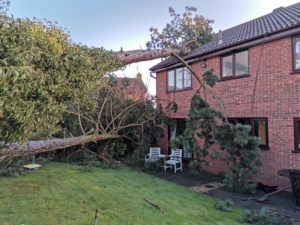
Can I assess a tree myself?
Property owners can carry out basic visual checks, but many structural defects are not obvious without specialist knowledge and equipment.
Factors such as internal decay, root problems and hidden weaknesses often require a trained arborist to identify accurately.
If you are unsure about the condition of a tree, it is always better to seek professional advice rather than wait until a problem develops.
When should I contact a tree surgeon?
You should consider arranging an inspection if:
- Large branches have died or fallen
- The tree has developed a noticeable lean
- You can see significant cracks or cavities
- Fungi are growing on the trunk or around the base
- The tree is close to buildings, roads or public areas
- You have concerns following a storm
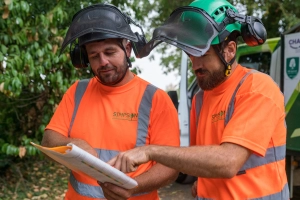
A qualified arborist such as our team at Simpson Arboriculture can assess the condition of the tree, identify any risks and recommend the most appropriate course of action, whether that involves monitoring, pruning, bracing or, in some cases, removal.
Final thoughts
Most trees are far safer than people assume and provide enormous benefits to our environment and properties. However, like any living structure, they can develop defects over time.
Regular inspections and early intervention can help prevent problems, protect people and property, and often allow valuable trees to be retained safely for many years to come.
If you are concerned about the condition of a tree on your property, seeking professional advice can provide peace of mind and help you make an informed decision. At Simpson Arboriculture, we offer free quotations. To arrange your quote, you can get in touch with us via our website.



What Happens to Waste After Tree Work?
One of the most common questions we get asked after carrying out tree work is: “What happens to all the branches, logs and woodchip?”
The simple answer is that nothing goes to waste.
At Simpson Arboriculture, we operate a 100% recycling policy for all timber and green waste generated through our tree surgery, forestry and arboricultural work. Every load of wood and woodchip is processed and put to good use, ensuring that valuable natural resources are never unnecessarily sent to landfill.
Woodchip: a valuable resource
When we carry out tree work, smaller branches and brash are processed through our woodchippers, producing woodchip.
Rather than disposing of this material, we recycle it in several ways.
A significant proportion of our woodchip is dried and used as biomass fuel in our own boilers. These boilers provide renewable heat for our firewood drying operations.
We also supply woodchip to other biomass users who utilise it as a sustainable fuel source.
In addition, woodchip is popular with customers for:
This means that even the smallest branches from a tree can continue to provide value long after the work has been completed.
From waste wood to firewood
Larger sections of timber are carefully processed into firewood logs.
Rather than being discarded, suitable timber is processed and dried to create high-quality firewood for our log customers. This allows us to make full use of the material generated through tree work while providing a sustainable heating fuel.
Fuel for our kiln-drying process
Not all timber is suitable for producing firewood logs, but that doesn’t mean it goes to waste.
Lower-grade timber and offcuts are used as fuel within our biomass heating system. The heat generated powers our log drying kiln, which dries our firewood to the high standards our customers expect.
This creates a highly efficient circular process, where material generated through tree work helps to fuel the production of ready-to-burn firewood.
A truly circular approach
Our recycling process ensures that every part of the tree is utilised:
As a result, we achieve 100% recycling of the timber and green waste produced through our operations.
Sustainable tree care
Responsible tree management doesn’t end when the work is complete.
By investing in biomass heating, firewood production and sustainable recycling methods, we’re able to ensure that every tree we process continues to provide value. Whether it’s heating homes, producing renewable energy, improving gardens or supporting local businesses, the material from tree work can provide another use.
When you choose Simpson Arboriculture, you can be confident that your tree waste won’t be wasted at all. Instead, it becomes part of a sustainable recycling process that makes the most of every branch, log and woodchip produced.
How Do I Get Rid of My Tree Stump? Stump Grinding, Eco Plugging & Stump Removal Explained
Once a tree has been removed, you’re often left with the stump. While this may not seem like a problem at first, many homeowners soon find that an old stump can get in the way of mowing, landscaping projects, replanting, or simply enjoying their garden.
If you’re wondering how to get rid of a tree stump, there are several options available. The best solution depends on factors such as the stump’s size, location, accessibility and your plans for the area.
Why remove a tree stump?
There are many reasons why people choose to remove tree stumps, including:
Option 1: Leave the stump to decay naturally
The simplest option is to leave the stump in place and allow it to decompose naturally.
Some property owners choose to use old stumps as wildlife habitats, natural garden features or rustic planters. However, depending on the tree species and stump size, natural decay can take many years.
If the stump is likely to cause inconvenience or you have plans for the area, you may wish to consider a more proactive approach.
Option 2: Dig out the stump
Small stumps can sometimes be removed by hand using spades, mattocks and other digging tools.
However, larger stumps often have extensive root systems that make removal physically demanding and time-consuming. Excavating a mature stump can also cause significant disturbance to lawns, borders and surrounding areas.
For most larger stumps, professional stump grinding is usually a more practical solution.
Option 3: Professional stump grinding
Stump grinding is the most effective way to remove a tree stump in many situations.
Using specialist machinery, the stump is ground down below ground level, allowing the area to be re-turfed, replanted or incorporated into future landscaping projects. Unlike full excavation, stump grinding causes minimal disruption to the surrounding area.
At Simpson Arboriculture, we offer professional stump removal and stump grinding services across Lincolnshire and the surrounding areas. Whether you have a single garden stump or multiple large stumps on a commercial site, we have the equipment and expertise to carry out the work safely and efficiently.
Our stump grinding equipment
To suit different types of projects, we operate two specialist stump grinders.
Rayco RG37T stump grinder
Our Rayco RG37T stump grinder is ideal for most domestic stump grinding work. Its compact design allows it to access many residential gardens while providing the power needed to remove stumps quickly and effectively.
Greentec Piranha stump grinder
For larger-scale stump removal projects, we utilise our Greentec Piranha stump grinder. This powerful machine is particularly suited to removing large stumps or multiple stumps on commercial sites, development land, woodland and forestry projects.
Is my stump suitable for grinding?
Stump grinding machines require suitable access to reach the stump safely.
Stump grinding is generally possible where:
Unfortunately, stump grinding may not be suitable where:
If you’re unsure whether your stump can be ground out, our team can assess the site and advise on the available options.
Option 4: Eco plugs
In situations where stump grinding is not practical, eco plugging can provide an effective and affordable alternative.
Eco plugs contain a measured dose of herbicide that is inserted directly into the stump. Once installed, they prevent regrowth and gradually kill the remaining root system.
Unlike stump grinding, eco plugging does not physically remove the stump. Instead, the stump is left to decompose naturally over time while preventing the tree from producing new shoots.
Eco plugging can be particularly beneficial where:
For inaccessible stumps, eco plugging can often provide a practical and economical solution.
Can I plant another tree in the same spot?
Because stump grinding leaves some of the root system underground, it is usually advisable to plant the replacement tree slightly offset from the original location.
If you’re planning to replant, our team can advise on the most suitable approach during your quotation.
Free stump removal quotations
If you have an unwanted tree stump and would like professional advice, Simpson Arboriculture offers free quotations for stump grinding, stump removal and eco plugging services.
We’ll assess the size of the stump, site access and your future plans for the area before recommending the most suitable solution.
Whether you need a single garden stump removed or multiple stumps treated across a larger site, our experienced team at Simpson Arboriculture is here to help. For more information, please visit the Stump Treatment page on our website. There’s an option to complete a form with your stump details, so we can provide you with a quotation.
Is my Tree Dangerous? Signs to Look Out For
Trees are an important part of our gardens, parks and landscapes. They provide shade, privacy, wildlife habitat and can add significant value to a property. However, like any living organism, trees can develop problems that may make them unsafe.
A dangerous tree does not always look obviously unhealthy. In some cases, a tree can appear perfectly normal while hidden defects weaken its structure. Understanding the warning signs can help you identify potential issues before they become a serious risk.
What makes a tree dangerous?
A tree may be considered dangerous when it has a higher likelihood of failure and could cause injury or damage if it falls or loses branches.
The level of risk depends on several factors, including:
Not every defect means a tree is dangerous, but certain signs should never be ignored.
Common signs that a tree may be dangerous
Dead or dying branches
One of the most obvious warning signs is the presence of dead branches, particularly large limbs high in the canopy.
Dead wood can become brittle and may fall without warning, especially during windy weather. If you notice branches with no leaves during the growing season, peeling bark, or limbs that appear dry and lifeless, it may be time for a professional inspection.
Cracks in the trunk or major limbs
Visible cracks can indicate structural weakness within the tree.
While some cracks are superficial, others may extend deep into the wood and affect the tree’s ability to support its own weight. Large splits or cracks should always be assessed by a qualified arborist.
Fungal growth
The presence of fungi on or around a tree can sometimes indicate internal decay.
Common examples include bracket fungi growing from the trunk or large roots. These fungi may suggest that parts of the tree are rotting internally, potentially reducing its structural strength.
Not all fungal growth is a cause for alarm, but it is worth seeking professional advice if you notice mushrooms or brackets appearing on a tree.
Leaning trees
Many trees naturally grow at an angle and remain perfectly stable for decades.
However, a tree that has recently started leaning, or one that appears to be lifting soil around its base, may indicate root failure or instability.
Sudden changes in a tree’s position should be investigated as soon as possible.
Cavities and hollow areas
Hollows can provide valuable habitat for wildlife, but they can also reduce the structural integrity of a tree.
The significance depends on the size and location of the cavity, as well as the amount of sound wood remaining. A professional assessment can determine whether the tree remains safe to retain.
Decay around the base
The root system is essential for keeping a tree stable.
Signs of decay around the base of the trunk, exposed roots, or areas of soft, crumbling wood may indicate a loss of structural support. Problems below ground often go unnoticed until more obvious symptoms appear.
Excessive dead leaves or sparse growth
If a tree shows poor leaf coverage, unusually small leaves, premature leaf drop, or significant dieback in the canopy, it may be under stress or suffering from disease.
While these symptoms do not automatically make a tree dangerous, they can indicate underlying health issues that warrant investigation.
Storm damage and tree safety
Following strong winds or storms, it is advisable to inspect trees for:
Some damage may not be immediately visible from the ground, which is why a professional assessment is often recommended after severe weather.
Can I assess a tree myself?
Property owners can carry out basic visual checks, but many structural defects are not obvious without specialist knowledge and equipment.
Factors such as internal decay, root problems and hidden weaknesses often require a trained arborist to identify accurately.
If you are unsure about the condition of a tree, it is always better to seek professional advice rather than wait until a problem develops.
When should I contact a tree surgeon?
You should consider arranging an inspection if:
A qualified arborist such as our team at Simpson Arboriculture can assess the condition of the tree, identify any risks and recommend the most appropriate course of action, whether that involves monitoring, pruning, bracing or, in some cases, removal.
Final thoughts
Most trees are far safer than people assume and provide enormous benefits to our environment and properties. However, like any living structure, they can develop defects over time.
Regular inspections and early intervention can help prevent problems, protect people and property, and often allow valuable trees to be retained safely for many years to come.
If you are concerned about the condition of a tree on your property, seeking professional advice can provide peace of mind and help you make an informed decision. At Simpson Arboriculture, we offer free quotations. To arrange your quote, you can get in touch with us via our website.
Should you Remove Deadwood on a Tree?
Deadwood is a natural part of a tree’s life cycle, but that does not always mean it should be left alone. In some cases, dead branches can create safety risks, encourage decay, or affect the overall health and appearance of a tree.
So, should you remove deadwood on a tree? In most situations, the answer is yes — especially where safety, tree health, or property protection are concerned.
What Is deadwood?
Deadwood refers to branches or limbs that have died and are no longer producing leaves or growth. These branches can vary in size from small twigs to large limbs high in the canopy.
There are several reasons why branches die, including:
Some deadwood is completely normal, particularly on mature trees. However, excessive deadwood can sometimes indicate underlying health issues.
Why remove deadwood?
Safety
One of the main reasons for deadwood removal is safety. Dead branches become brittle over time and are more likely to snap and fall, especially during strong winds or bad weather.
Falling branches can potentially damage:
More importantly, they can pose a serious risk to people using the area beneath the tree.
Trees located near roads, public spaces, schools, gardens, or driveways should be inspected regularly for deadwood.
Tree health
Removing dead branches can also benefit the tree itself. Deadwood can sometimes provide entry points for fungi, decay, and pests, particularly if branches have fractured or split.
Carefully removing dead material allows arborists to inspect the tree properly and helps maintain a healthier tree structure.
Appearance
Dead branches can make a tree look neglected or unhealthy. Deadwooding helps improve the overall appearance of a tree while maintaining its natural shape.
For commercial properties, public spaces, and well-maintained gardens, this can make a noticeable difference.
Is all deadwood bad?
Not necessarily.
In woodland settings or large natural areas, deadwood can provide valuable habitats for birds, insects, and wildlife. Standing deadwood is an important part of many ecosystems.
The decision to remove deadwood depends on several factors, including:
In some cases, only hazardous dead branches need removing, while non-dangerous dead branches can be retained for ecological value.
When should deadwood be removed?
Deadwood can generally be removed at any time of year, although timing may vary depending on the tree species and surrounding wildlife activity.
It is a good idea to arrange an inspection if you notice:
After storms or high winds, trees should also be checked for newly damaged or hanging limbs.
Can you remove deadwood yourself?
Small dead branches on young trees may be manageable with the correct tools and knowledge. However, larger deadwood removal can be dangerous, particularly at height or near buildings and roads.
Professional arborists have the training and equipment to:
Incorrect pruning can sometimes cause more harm than good, so professional advice is always recommended for mature or high-risk trees.
Professional tree surgery services
Deadwooding is a common part of professional tree maintenance and can help improve safety, appearance, and long-term tree management.
A qualified arborist such as our team at Simpson Arboriculture can assess whether deadwood removal is necessary and recommend the most suitable approach for your tree and location.
If you are concerned about dead branches on your trees, get in touch with us at Simpson Arboriculture. We would be happy to discuss your needs and arrange a free quotation.
Who Is Responsible for Trees on Boundary Lines?
Trees can sometimes become a source of confusion between neighbours, especially when branches stretch across fences, leaves fall into nearby gardens, or a tree sits directly on a boundary line. One of the most common questions we’re asked is: who is actually responsible for the tree?
While every situation can be slightly different, there are some general rules that can help homeowners understand their responsibilities and rights when it comes to boundary trees.
What is a boundary tree?
A boundary tree is usually a tree whose trunk sits directly on, or very close to, the boundary line between two properties.
In most cases, responsibility depends on where the main trunk is located:
This can sometimes make decisions around maintenance, pruning or removal more complicated, particularly if both parties have different opinions on what should happen.
Who is responsible for maintenance?
Generally, the owner of the tree is responsible for its maintenance and overall condition.
This includes:
If a tree is jointly owned, both neighbours may share responsibility for decisions and costs.
Can you cut back branches overhanging your property?
Under UK common law, a property owner is usually entitled to prune branches or roots that cross into their property boundary. This is often referred to as the “right to abate”.
However, there are some important points to remember:
It is always sensible to speak with your neighbour before any work is carried out, even where you may legally be entitled to do it.
What about dangerous trees?
If a tree appears unsafe, diseased or storm damaged, it is important to act quickly.
The tree owner may be responsible if they were aware — or reasonably should have been aware — that the tree posed a risk and failed to take appropriate action.
Signs that may indicate a problem include:
A qualified arborist can inspect the tree and provide professional advice on its condition and any recommended work.
Trees in conservation areas or protected by TPOs
Before carrying out any tree work, it is important to check whether the tree is protected.
Some trees are covered by:
In these cases, permission from the local authority may be required before pruning or removal can take place — even if the branches extend into your property.
Our advice: Keep communication friendly
Boundary trees can easily become a source of tension between neighbours, particularly when there are concerns about shade, debris, blocked gutters or property damage.
At the end of the day, most situations are best resolved through open and friendly communication. We always encourage customers to have a conversation with their neighbours first and try to reach an amicable agreement wherever possible.
As tree surgeons, our role is to provide professional advice on the condition and management of trees. Clear communication and a practical approach usually lead to the best outcome for everyone involved.
Need professional tree advice?
If you’re unsure about the condition of a boundary tree or would like professional guidance on suitable maintenance work, our team is always happy to help.
We can assess tree health, advise on safe and appropriate pruning, and help ensure any work is carried out professionally and in line with current regulations.
To find out more, you can get in touch with us via our website. Our friendly team would be happy to discuss the work with you and answer any questions you may have.
How to store firewood for maximum efficiency
If you rely on firewood for heating or enjoy cosy fires during the colder months, proper storage is key to ensuring it burns efficiently. Wet or improperly stored wood can be difficult to light, produce excessive smoke, and generate less heat.
So how do you store firewood for maximum efficiency? Below, we have provided some useful tips for storing firewood correctly, and getting the best performance out of your logs.
1. Choose the right firewood
Before storing your firewood, make sure you’re using high-quality logs. Hardwood species like oak, ash, and beech burn longer and hotter than softwoods like pine, which burn quickly and produce more creosote (a sticky, flammable residue).
Kiln-dried or well-seasoned wood with a moisture content below 20% is ideal for clean and efficient burning.
At Simpson Arboriculture, all our logs are kiln-dried, hardwood and are Ready to Burn approved.
2. Keep firewood dry and well-ventilated
Moisture is the biggest enemy of firewood. To keep your logs dry:
3. Store firewood in the right location
4. Rotate your stock
Use the first in, first out method to ensure you’re always burning the driest wood. Stack new firewood behind or next to older, drier wood so that the most seasoned logs are used first.
5. Keep pests away
Woodpiles can attract insects and rodents, so:
6. Season your own firewood
If you’re cutting and drying your own firewood:
7. Test firewood before burning
To check if your firewood is ready to burn:
Firewood: Time to get stocked up
Proper firewood storage ensures your logs are dry, efficient and ready to burn when you need them. Whether you’re heating your home or enjoying a firepit outdoors, following these storage tips will help you get the most heat and longest burn time from your wood.
Need high-quality kiln-dried firewood? Get in touch with us for high-quality, Ready to Burn logs. These are available all year round and are delivered for free within 10 miles of Ancaster. For more information or to place an order, please visit our online log store.
Can I prune my neighbour’s tree?
Overhanging branches, blocked light and falling leaves creeping into your garden can all lead to one common question: Can I prune my neighbour’s tree?
The short answer is yes — in some circumstances. However, there are important legal considerations, neighbourly etiquette and tree protection laws to be aware of before organising for any work to be carried out.
Here’s what homeowners in the UK should know.
Can I cut back branches hanging over my property?
In the UK, you generally have the legal right to cut back branches or roots from a neighbour’s tree if they cross over your property boundary. This is known as your “right to abate a nuisance”.
However, there are a few important conditions:
We would always recommend contacting a qualified tree surgeon to carry out any pruning work, to ensure that the pruning supports the health of the tree, and that work is completed to a high standard.
Who owns the cut branches?
Legally, any branches, fruit or cuttings removed from the tree still belong to the tree owner — your neighbour.
It is considered good practice to offer the cuttings back to them rather than simply disposing of them. In reality, many neighbours will not want them, but offering first helps avoid unnecessary disputes.
Should I speak to my neighbour first?
Absolutely.
Even if you are legally entitled to prune the overhanging growth, a friendly conversation beforehand can prevent misunderstandings and maintain good relationships.
Your neighbour may:
Approaching the situation politely often leads to the best outcome for everyone involved.
What If the tree has a Tree Preservation Order (TPO)?
If the tree is protected by a Tree Preservation Order (TPO) or located within a conservation area, permission from the local authority may be required before any pruning work takes place — even if the branches extend into your garden.
Carrying out unauthorised work on a protected tree can lead to significant fines.
If you are unsure whether a tree is protected, your local council or a professional arborist can help check before work begins.
What if the tree is dangerous?
If a neighbour’s tree appears unsafe or is causing damage, it is best to raise the issue with them as soon as possible.
Signs may include:
Where there is genuine risk, a qualified tree surgeon can inspect the tree and provide advice or a written report if needed.
The importance of professional tree pruning
Improper pruning can permanently damage a tree, create safety risks and even make future problems worse.
Professional tree surgeons understand:
Whether the issue is overhanging branches, excessive shading or storm damage, expert advice can help resolve matters safely and responsibly. Simpson Arboriculture are fully qualified, experienced and insured, so both you and your neighbour can rest assured that everything is taken care of.
What’s the difference between tree crown lifting and crown reduction?
If you’ve been advised that your tree needs some attention, you may have come across terms like crown lifting and crown reduction. While they might sound similar, they serve very different purposes—and choosing the right approach can make a big difference to the health, safety, and appearance of your tree.
So what is the difference between crown lifting and crown reduction? In this blog, we will provide a clear breakdown to help you understand what each involves and when they are typically used.
What is Crown lifting?
Crown lifting is the process of removing the lower branches of a tree’s canopy (its “crown”) to increase the clearance between the ground and the lowest branches.
This is often carried out to:
Rather than altering the overall size of the tree, crown lifting simply raises the height of the canopy. The shape and structure of the upper crown remain largely unchanged.
A careful approach is important—removing too many lower branches at once can affect the tree’s balance and long-term health. We would always advise having this carried out by professional tree surgeons. Qualified and experienced arborists will know how to effectively crown raise a tree to achieve the intended outcome, whilst supporting the health and balance of the tree.
What is crown reduction?
Crown reduction involves reducing the overall size of the tree’s canopy by shortening the outer branches. This is done by selectively cutting back to suitable growth points, maintaining the tree’s natural shape.
It’s commonly used to:
Unlike crown lifting, crown reduction affects the entire canopy and requires skilled pruning to ensure the tree remains healthy and structurally sound. Again, as with any tree surgery work, you’re always best consulting a professional tree surgeon or tree surgery company to carry out the work.
Key differences at a glance
Which one does your tree need?
The right approach depends on your goals and the condition of the tree. For example:
In some cases, a combination of both techniques can be used to achieve the desired result.
A final thought
Tree work is as much about long-term care as it is about immediate results. Both crown lifting and crown reduction should be carried out with an understanding of the tree species, its growth habits, and its surroundings.
If you’re unsure what your tree needs, getting professional advice ensures the work is done safely and in a way that supports the tree’s health for years to come. At Simpson Arboriculture, our team are fully qualified and experienced, making us a great choice to carry out your next tree work project.
If you would like guidance on the best approach for your trees, you can get in touch with us via our website. We would be happy to arrange for one of our team to come out and discuss the work with you.
What’s the difference between tree pollarding and crown reduction?
Today, we are addressing a common query among our customers: What’s the difference between tree pollarding and crown reduction? These two pruning techniques may sound similar, but they serve distinct purposes in maintaining the health and aesthetics of a tree. Let’s shed some light on when and why each method could be undertaken.
Understanding tree pollarding
Tree pollarding is a specific pruning technique that involves the removal of all branches and stems of a tree back to the trunk. This severe form of pruning results in a compact head of branches, often referred to as a ‘Pollard head’. We would typically carry this out above the ground depending on the size of the tree.
Understanding crown reduction
Crown reduction on the other hand, is a less radical approach to tree pruning. This technique involves selectively reducing the height and spread of a tree’s crown while maintaining its natural shape.
Choosing the right technique
The decision between tree pollarding and crown reduction depends on various factors, including the tree species, its location and the aims and objectives of the work. Consulting with a professional and experienced arborist, such as our team at Simpson Arboriculture, is crucial. We can assess your tree and suggest appropriate action which will both achieve the customers’ aims and support the health and longevity of the tree. We specialise in carrying out tree work to ‘British Standard BS3998: 2010 Tree Work- recommendations’.
Conclusion
In the world of arboriculture, understanding the distinctions between tree pollarding and crown reduction is key to making informed decisions about the maintenance of your trees. Whether you’re looking to control size, improve aesthetics or enhance the health of your trees, Simpson Arboriculture is here to help! We can provide expert advice and professional services tailored to meet the needs of your trees. You can get in touch with us in the office or via our by submitting an enquiry on our website.
How much does it cost to have a tree cut down in the UK?
If you’re considering having a tree removed, one of the first questions you’ll likely have is: how much will it cost?
The honest answer is that tree removal can vary quite a bit depending on the job. Every tree and every site is different, so pricing is usually based on a number of factors rather than a fixed fee. That said, understanding what influences the cost can help you get a clearer idea of what to expect.
At Simpson Arboriculture, we aim to keep our prices realistic and affordable, whilst prioritising quality and a high standard of work.
Typical cost ranges
As a general guide, smaller jobs that can be completed within a few hours will usually fall in the hundreds of pounds.
Larger or more complex removals that take a full day (or longer) can cost £1,000 – £1300 or more.
Our team at Simpson Arboriculture usually work on day rates depending on the size of the crew and the equipment required.
These figures are only a guide, and the actual cost will depend on the specifics of the work involved. We do also have to factor in travel to and from site which is something to be aware of.
What affects the cost of tree removal?
There are several key factors that determine how much a tree removal job will cost:
1. Size and type of tree
Larger trees take more time, labour and equipment to remove. A small ornamental tree is generally far quicker and easier to deal with than a mature oak or beech.
2. Location and access
Access is one of the biggest influences on cost. If the tree is in an open space with easy access for our team and any machinery, the work is more straightforward.
However, if it’s in a back garden with limited access, overhanging buildings, or close to roads, fences or power lines, the job becomes more technical and time-consuming.
3. Complexity of the job
Some trees can be felled in one piece, while others need to be carefully dismantled in sections. This often involves climbing, rigging and lowering branches safely to the ground, which increases the time and skill required.
4. Equipment needed
The type of equipment required can significantly affect the price. For example:
The more equipment involved, the higher the overall cost.
5. Number of operatives
More complex or hazardous jobs often require a larger team to carry out the work safely and efficiently. For example, if the tree is close to a road, an operator may be required to manage traffic through the use stop-go boards. Alternatively, if the tree is over a footpath, again, an operator may be required to manage any footfall in order to keep members of the public safe. A job can also take longer if there are a large amount of obstacles beneath the tree for the team to avoid.
6. Waste removal
Removing and disposing of timber, branches and woodchip is usually included, but the volume of waste will affect the time and cost. Some customers choose to keep logs or woodchip, which may reduce the time slightly.
7. Stump removal
Cutting a tree down doesn’t usually include removing the stump. Stump grinding is priced separately, depending on the size and location of the stump, which determines the time needed.
Why it’s worth getting a professional quote
While it can be tempting to look for a quick estimate, the most accurate way to price a job is through a site visit. This allows us to assess:
A professional quote ensures the job is done safely, efficiently and in line with current regulations.
A final word
Tree removal is a skilled and sometimes complex job, and costs reflect the level of expertise, equipment and planning involved. While prices can vary, investing in experienced professionals helps ensure the work is carried out safely and to a high standard.
Simpson Arboriculture is an Arb Approved contractor. This is the most prestigious accreditation in the arboricultural industry and means that customers can rest assured knowing they are choosing a team of fully qualified, insured and professional tree surgeons to carry out the work. For more information, please see the Arb Association’s information leaflet on Choosing a Tree Surgeon.
If you’re unsure about a tree on your property, getting some advice is always a good place to start. A quick visit or conversation can often clarify the best approach and give you a clearer idea of the cost. If you are interested in starting the process, you can get in touch with us in the office at Simpson Arboriculture- we are always happy to discuss this with you further and arrange a site visit.