Roadside tree work can involve considerably more planning than a typical tree surgery job. As well as managing the risks associated with the trees themselves, the team may also need to work around moving traffic, pedestrians, nearby properties, utilities and other site users.

Whether the work involves pruning a single roadside tree or removing multiple trees as part of a larger project, careful planning before work begins is essential.

At Simpson Arboriculture, we undertake roadside tree work ranging from smaller local jobs through to larger commercial projects. Here are some of the main considerations that can go into planning and carrying out this type of work safely and efficiently.
Assessing the Site Before Work Begins

Planning starts before the team arrives on site.

A site visit allows us to assess the trees, access, surrounding environment and any potential hazards that could influence how the work should be carried out.

For roadside work, this might include considering:

  • The size, condition and position of the trees
  • The type and speed of traffic using the road
  • Visibility for approaching vehicles
  • Pedestrian routes and public access
  • Nearby buildings, boundaries and other structures
  • Overhead and underground utilities
  • Space available for machinery and vehicles
  • How timber, woodchip and other arisings will be removed from site

Understanding these factors helps us determine the safest and most practical method of working before the job begins.

Traffic Management

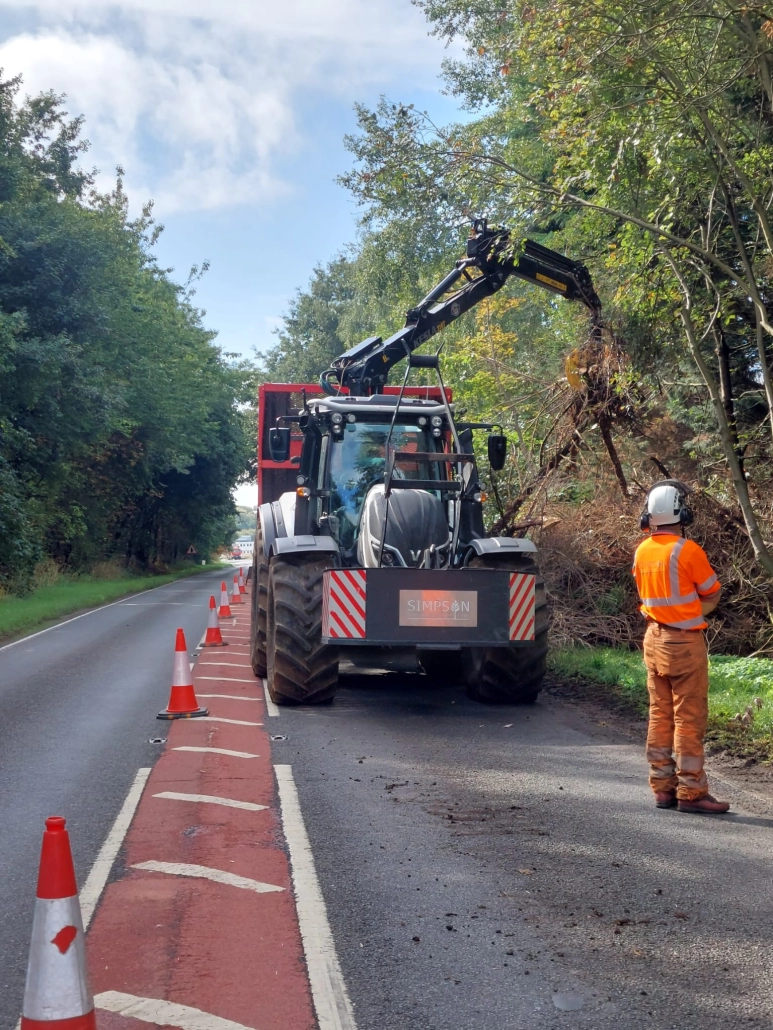
Traffic management can be one of the most important parts of roadside tree work.

Depending on the location and nature of the project, this may involve anything from managing vehicle movements around the work area to more extensive traffic management arrangements.

The objective is to create enough separation between the tree work and road users while allowing the work to be completed safely.

This needs to be considered alongside the tree work itself. For example, the team may need sufficient space for machinery to operate, timber to be processed and vehicles to enter or leave the site without creating additional hazards.

Planning these arrangements in advance can also help minimise disruption to road users.
Creating Safe Exclusion Zones

Tree work naturally involves falling branches, timber and machinery movements, meaning suitable exclusion zones are essential.

When working beside a road, establishing these areas can be more complicated because the site may be constrained by the carriageway, pavements, properties or other boundaries.

The work method therefore needs to consider where material will be felled or lowered, where machinery will operate and where ground staff can safely work.

Good communication between everyone involved is particularly important, especially where arborists, machine operators, traffic management personnel and other contractors may all be working within the same site.

Managing Pedestrians and Other Site Users

Vehicles are not the only consideration.

Footpaths, public rights of way, entrances to properties, workplaces and other pedestrian routes may pass close to the work area.

Where necessary, pedestrian access may need to be temporarily controlled or redirected so that members of the public cannot enter an active work zone.

On commercial sites, there may also be employees, contractors or delivery vehicles moving around the site. Coordinating the tree work with these activities can form an important part of the overall planning process.

Checking for Utilities

Both overhead and underground services can influence how tree work is carried out.

Overhead power lines are an obvious consideration, but underground electricity, gas, water and telecommunications services may also need to be taken into account, particularly where machinery will be travelling across the site or working close to service routes.

Identifying utilities before work starts allows the team to plan appropriate working distances and choose suitable machinery and methods.

Choosing the Right Machinery

Specialist machinery can make a significant difference on larger roadside projects.

Where site conditions allow, mechanised methods can reduce the amount of manual handling required and allow trees and timber to be controlled and processed efficiently.

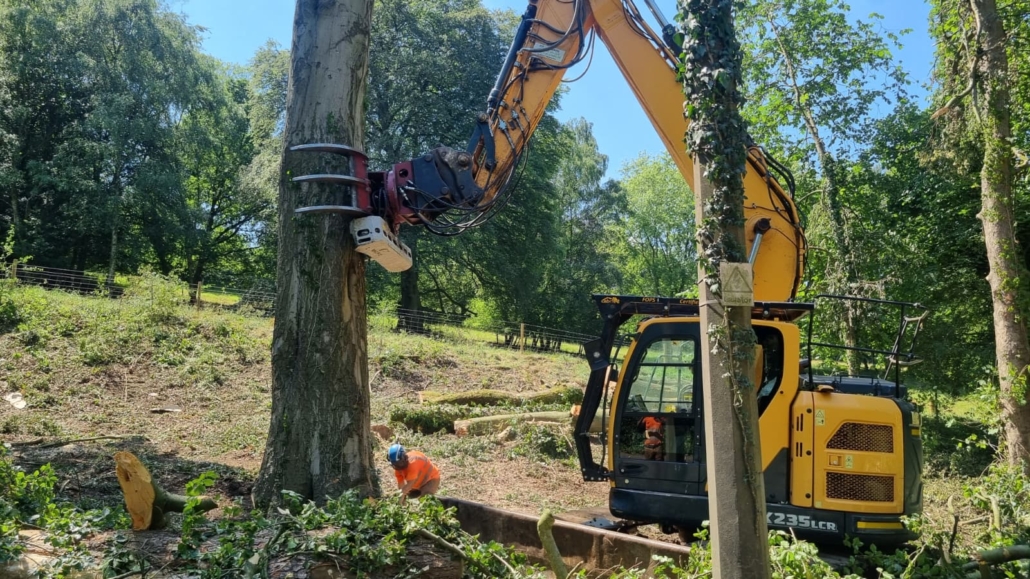
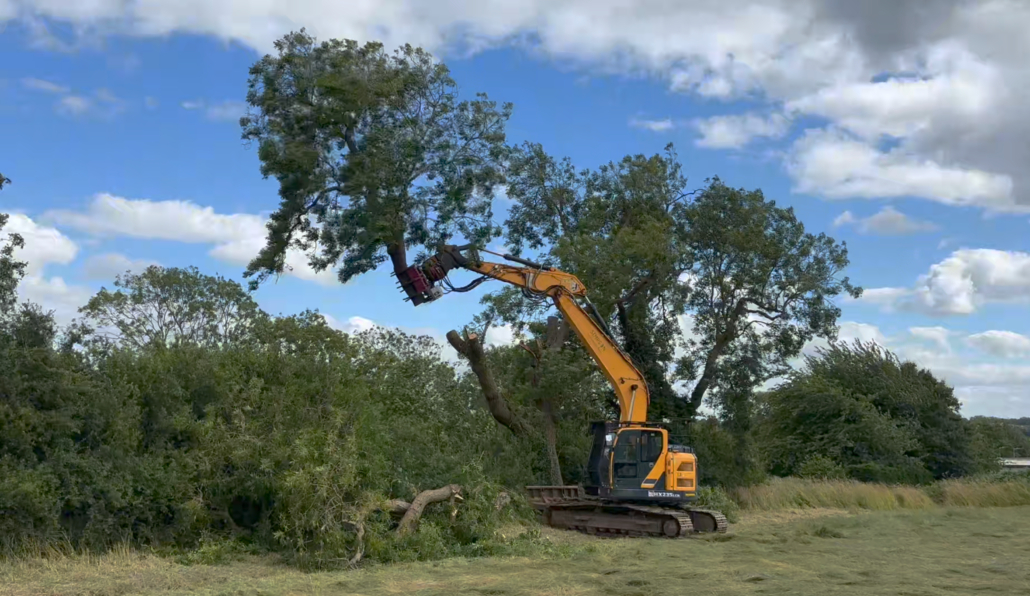
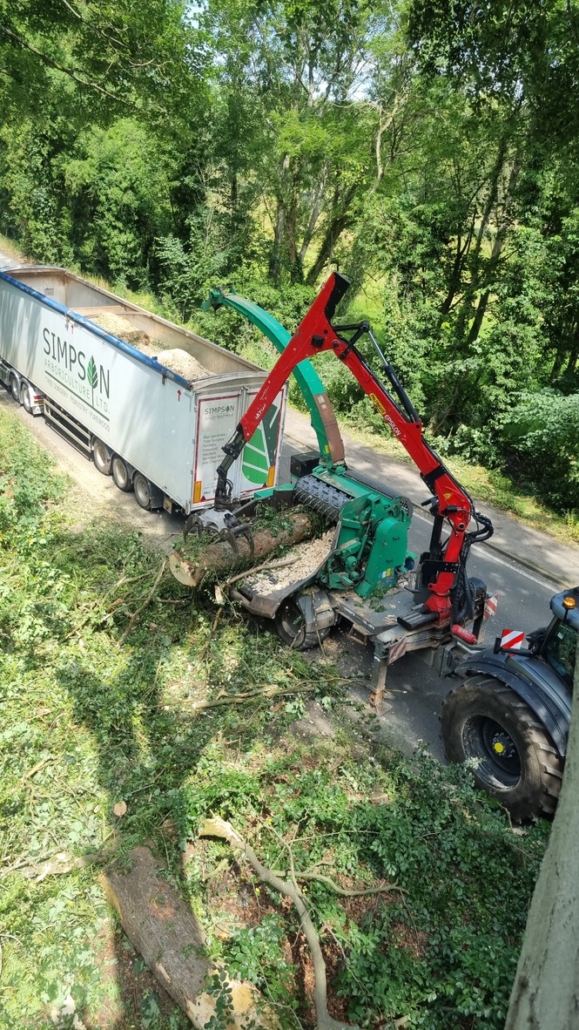
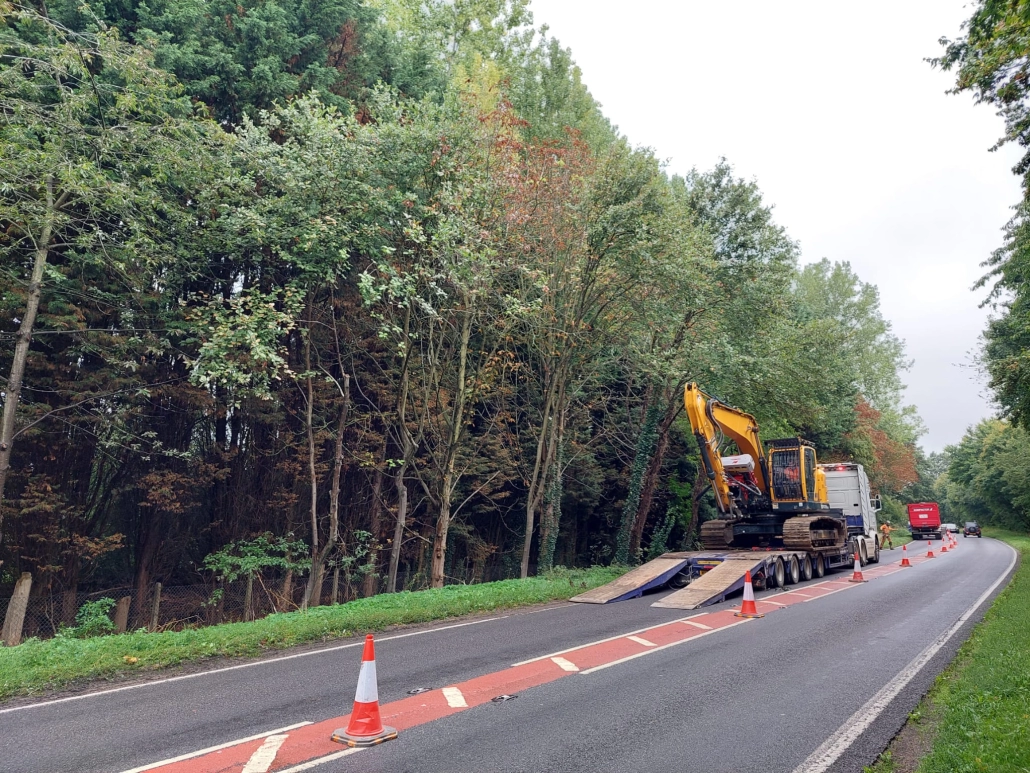
For example, excavators fitted with grapple saws can be used to dismantle or fell suitable trees while maintaining greater control over sections of timber. Crane-fed whole-tree chippers can then process material efficiently, while timber and woodchip can be loaded directly for removal from site.

Using machinery effectively is not simply a case of bringing the largest equipment available. Access, ground conditions, working space, traffic management and surrounding hazards all need to be considered when deciding which machines are appropriate.

Just as importantly, specialist machinery needs experienced operators who understand both the equipment and the arboricultural work being carried out.
Risk Assessments and a Clear Method of Work

Every site presents a different combination of risks.

Before work begins, a site-specific risk assessment helps identify those hazards and establish the control measures required. The team can then be briefed so that everyone understands the planned method of work, exclusion zones, machinery movements and their individual responsibilities.

Conditions can also change once work is underway. Weather, traffic, ground conditions or unexpected site hazards may mean that the original plan needs to be reviewed.

Having experienced people on site who can recognise these changes and adapt the work accordingly is an important part of managing a project safely.
Planning the Whole Operation

For larger roadside projects, tree removal is only one part of the job.

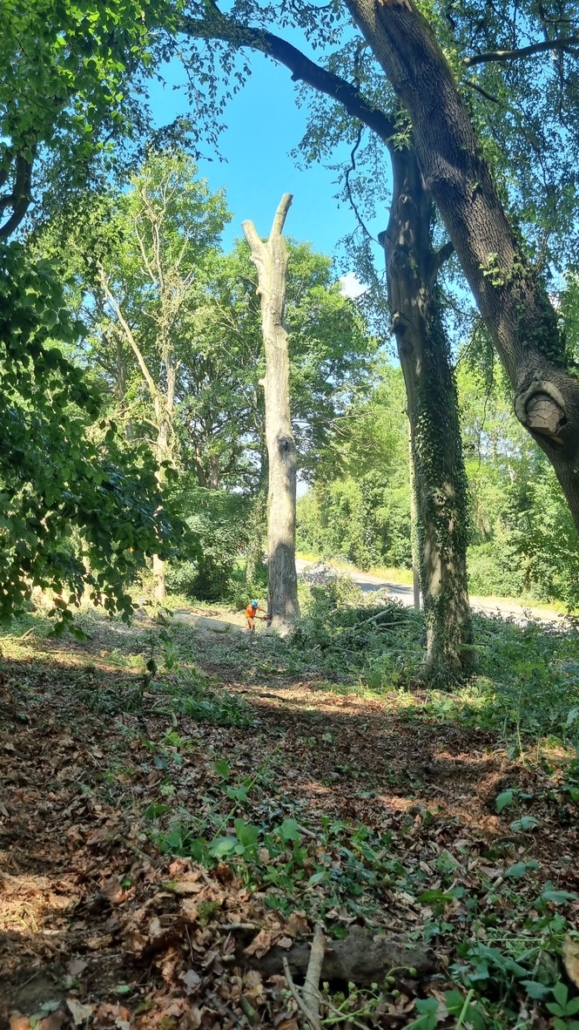
The complete operation may involve traffic management, machinery, felling or dismantling, chipping, timber extraction, loading, haulage and final site clearance.

Planning these stages together can make the project significantly more efficient. Machinery can be positioned where it is needed, timber can be moved without unnecessary handling and vehicles can be coordinated so material does not accumulate within the working area.

Our own machinery and in-house haulage capability means we can manage more of this process directly, helping us maintain better control over how a project progresses from the initial tree work through to the removal of timber, woodchip and other arisings.

Experience Makes a Difference

Roadside tree work demonstrates why arboriculture is about much more than simply cutting trees.

A successful project relies on understanding the site, selecting an appropriate method, coordinating people and machinery and continually managing the risks around the work area.

Projects such as our work at Renishaw Hall in Derbyshire provide practical examples of this type of planning in action, where roadside conditions, machinery, site access and the wider working environment all have to be considered together.

By combining experienced arborists and machine operators with specialist equipment and careful planning, we can undertake roadside tree work ranging from individual trees through to larger and more technically demanding commercial projects.

If you have a tree work project coming up and would like to find out more about what we can offer, you can get in touch via our website. We would be happy to discuss your project and arrange for a site visit. 
If you have ever received a quotation for tree work, you may have come across terms such as crown reduction, crown lifting, crown thinning or pollarding.

These are different methods of pruning a tree, each carried out for a particular reason. Although some of the terms sound similar, they can have very different effects on the size, shape and future management of a tree.

Understanding the terminology can make it much easier to know what work is being recommended and what your tree is likely to look like afterwards.

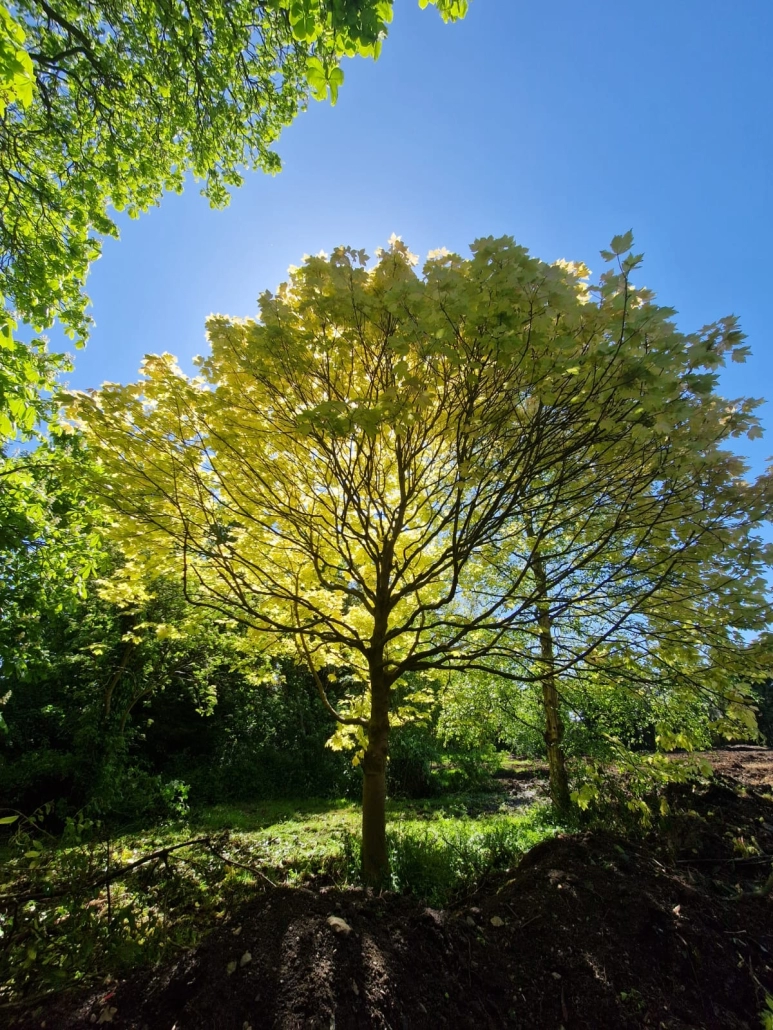
Summer pruning of tree

What is the crown of a tree?

Before looking at the different types of pruning, it helps to understand what arborists mean by the crown.

The crown is the upper part of the tree made up of its branches, twigs and foliage. Different pruning operations alter different parts of this crown depending on what needs to be achieved.

What is a crown reduction?

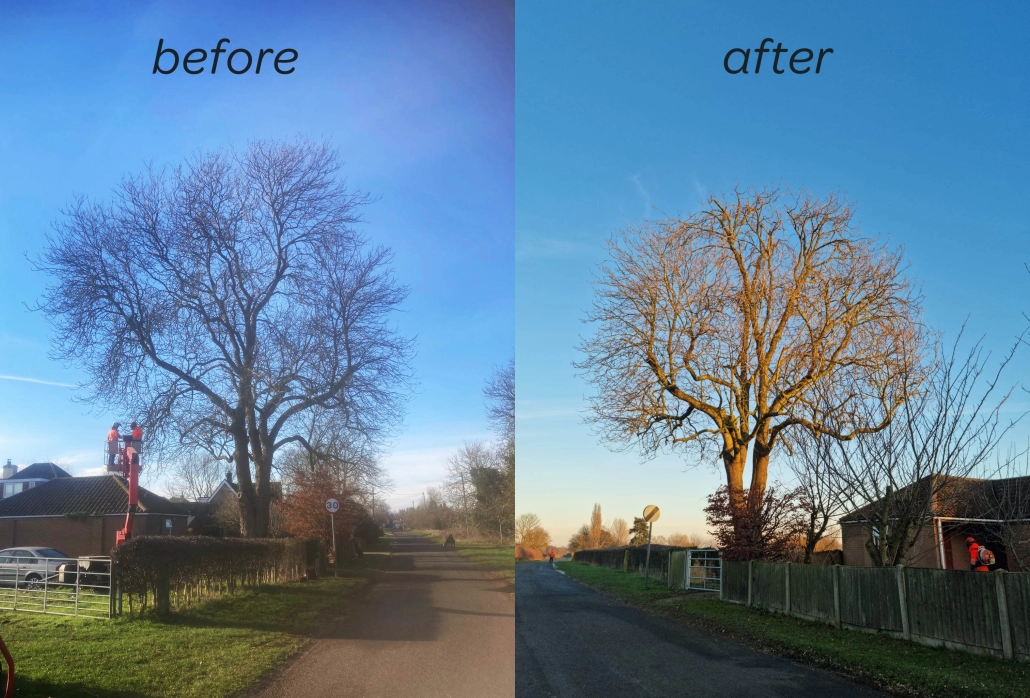
A crown reduction reduces the overall height and/or spread of a tree’s crown.

Rather than simply cutting branches back to the same level, selected branches are shortened to suitable growth points throughout the crown. The aim is to produce a smaller tree while retaining a natural, balanced shape.

A crown reduction may be recommended where a tree has become too large for its surroundings, where branches are extending towards buildings or other features, or where there is another arboricultural reason for reducing the size of the crown.

The amount of reduction should normally be clearly specified. For example, a quotation might describe a reduction in metres rather than simply stating that the tree will be “cut back”.

A properly carried out crown reduction requires careful pruning and consideration of the tree’s species, condition, structure and ability to respond to the work. Arboricultural Association standards for approved contractors specifically assess appropriate crown-reduction specifications, correct pruning cuts and the finished result.

What is a crown lift?

A crown lift, sometimes called crown raising, involves removing selected lower branches from a tree to increase the clearance between the ground and the bottom of the crown.

It does not mean reducing the height of the tree.

Crown lifting can be useful where low branches are obstructing a driveway, footpath, road, building or garden area. It can also make it easier to walk, mow or work underneath a tree and can allow more space beneath the canopy.

The work should be carefully considered, particularly on mature trees. Removing large lower limbs can create significant wounds and alter the structure of the tree, so it is not simply a case of removing every branch below a certain height.

A specification may therefore state the clearance that needs to be achieved, for example lifting the crown to a particular height above ground level.

What is crown thinning?

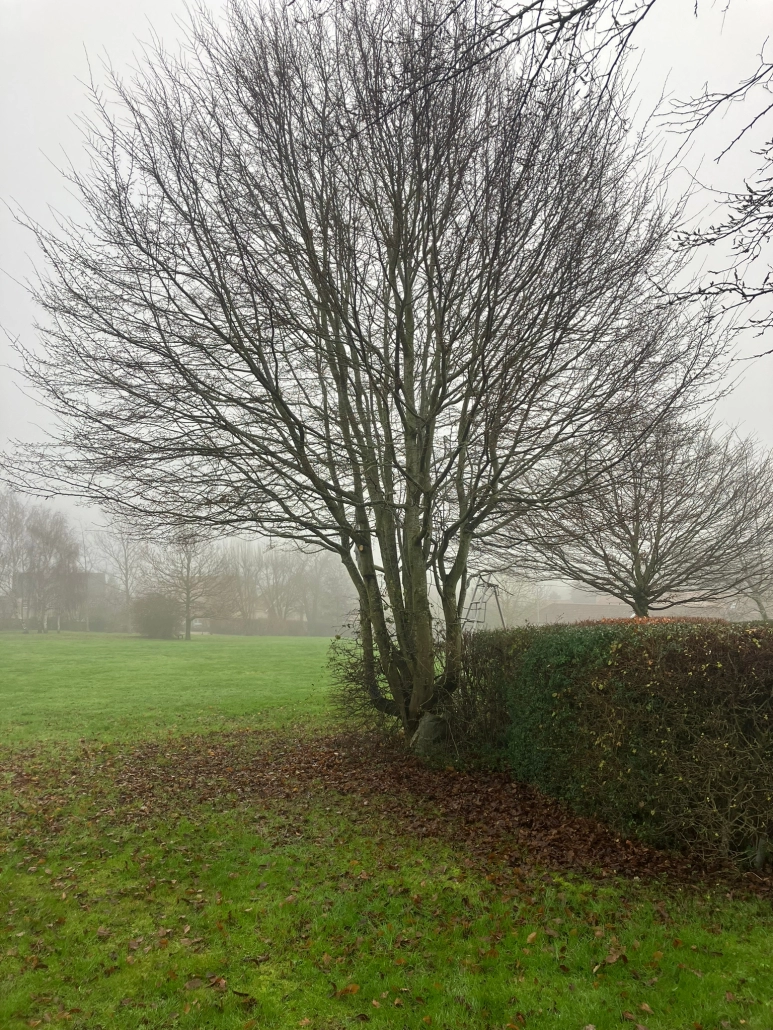
Crown thinning involves selectively removing a proportion of smaller branches throughout the crown while retaining its overall size and shape.

Unlike a crown reduction, crown thinning is not intended to substantially reduce the height or spread of the tree.

Instead, the aim is to reduce the density of branches within the crown. Depending on the tree and the reason for the work, this can increase light penetration and improve the distribution of branches throughout the canopy.

Crown thinning is usually expressed as a percentage so that the amount of growth to be removed is clearly defined. Arboricultural Association guidance for approved contractors describes thinning as a uniform operation carried out primarily towards the outer crown.

It is important not to remove too much foliage. Excessive or poorly distributed thinning can negatively affect the appearance and structure of a tree rather than improving it.

What is pollarding?

Pollarding is quite different from a standard crown reduction.

It is a method of managing certain trees by repeatedly cutting back branches to established points, encouraging new shoots to grow from these areas. Over time, distinctive swollen points known as pollard heads can develop.

Pollarding can be used to restrict the ultimate size of suitable trees and has traditionally been used to manage many street and landscape trees. Once a pollarding cycle has been established, the tree will usually require ongoing periodic management.

Importantly, pollarding is not simply another word for heavily cutting back a tree or “topping” it.

Whether pollarding is suitable depends on factors including the species, age, condition and previous management of the tree. Starting a new pollarding regime on an established tree is very different from maintaining a tree that has already been managed as a pollard for many years.

Which type of pruning does my tree need?

There isn’t one type of pruning that is suitable for every tree.

For example:

  • If a tree has become too large for the available space, a crown reduction may be considered.
  • If lower branches are causing an obstruction, a crown lift may be appropriate.
  • If the aim is to selectively reduce the density of the crown without significantly changing its overall dimensions, crown thinning may be recommended.
  • If a suitable tree is already managed on a regular pollarding cycle, pollarding may be required to maintain it.

In some situations, pruning may not be necessary at all, or a different type of tree work may be more appropriate.

This is why we assess the individual tree and its surroundings before recommending work. Species, age, condition, location, previous pruning and the reason for carrying out the work should all be taken into consideration.

Clear tree work specifications matter

Terms such as “trim the tree”, “cut it back” or “take some off the top” can mean very different things to different people.

A clear tree work specification helps both the customer and the arborist understand exactly what is going to be carried out. Where appropriate, this could include the type of pruning, the amount to be removed and the intended finished result.

At Simpson Arboriculture, we aim to carry out pruning work in accordance with BS 3998: Recommendations for Tree Work where applicable. As an Arboricultural Association ARB Approved Contractor, our work, knowledge and procedures are independently assessed as part of the scheme. 

If you are unsure what type of work your tree requires, we can assess the tree and recommend an appropriate course of action.

We provide professional tree surgery services for domestic and commercial customers throughout Lincolnshire and for larger projects, further afield. You can get in touch with us at Simpson Arboriculture via our website. Our friendly team would be happy to discuss options with you and arrange a free quotation for your tree work.

Tree work has traditionally relied heavily on skilled manual work – and there are still plenty of situations where traditional arboricultural methods are the right approach. However, specialist machinery can completely change the way we carry out certain projects.

Our continued investment in machinery allows us to undertake work that would otherwise be slower, more labour-intensive or more difficult using conventional methods alone. From grapple-saw dismantling and whole-tree chipping to harvesting, forwarding, mulching and timber haulage, the right combination of machinery and experienced operators can make a significant difference to how efficiently and safely a job progresses.

But for us, it isn’t simply about owning the machines. What matters is the capability they give our team – and knowing when, where and how to use them effectively.

Why mechanise tree work?

Every site and every tree presents a different set of challenges. Before starting work, we consider the safest and most efficient way to complete the job, taking into account factors such as access, tree condition, terrain, surrounding infrastructure, the volume of material and what needs to happen to that material afterwards.

Where appropriate, machinery can help us to:

  • Reduce manual handling and physical demands on our arborists
  • Keep people further away from dangerous or unstable trees
  • Process large quantities of timber and brash efficiently
  • Complete larger-scale projects within practical timescales
  • Reduce the number of separate contractors required on site
  • Manage more stages of a project ourselves
  • Maintain greater control over how work progresses from start to finish

The result isn’t simply “bigger machines”. It’s a different way of approaching the work.

Keeping our arborists safer

Safety is one of the most important reasons for using machinery.

Tree surgery will always involve an element of risk, but mechanisation can reduce the amount of time our arborists need to spend climbing, handling heavy timber manually or working in close proximity to hazardous trees.

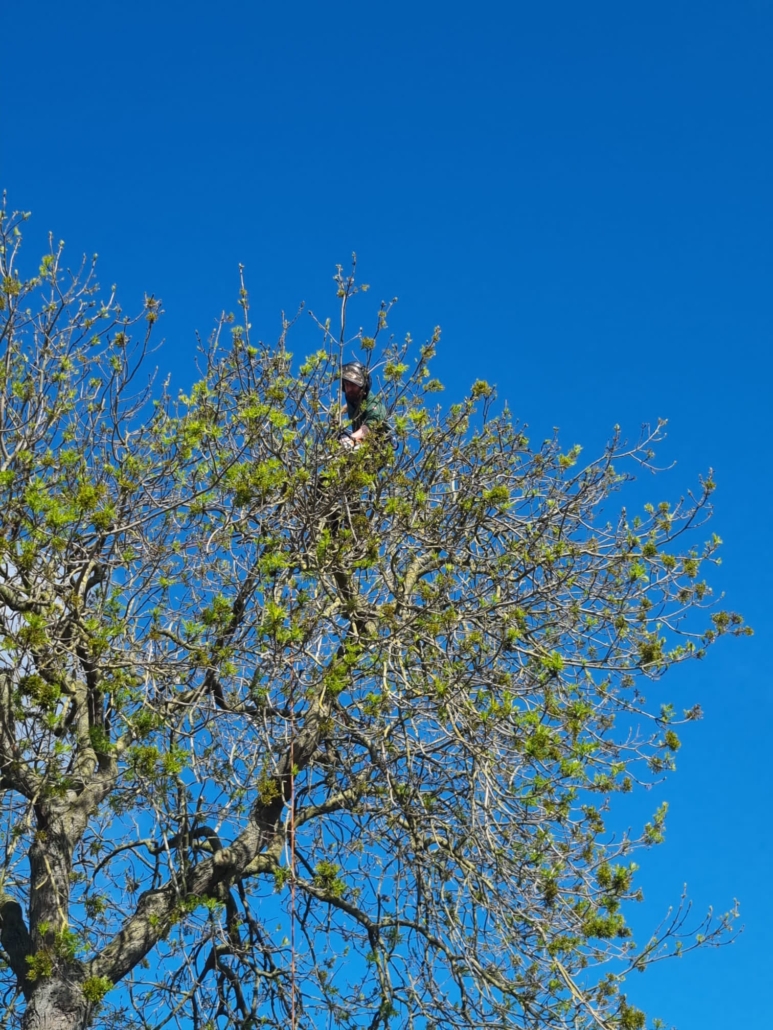
Our Hinowa MEWP, for example, provides a working height of up to 20 metres and can give our arborists an alternative to climbing. This can be particularly valuable when working on dead, dying or structurally compromised trees, including trees affected by ash dieback.

Dead timber can be brittle, unpredictable and structurally unstable. Using a MEWP allows an arborist to work from a platform rather than relying on the tree itself for support. It can also be an efficient option where branches are difficult to reach or where a tree offers limited suitable anchor points for climbing.

On other sites, machinery can take the arborist out of the tree altogether.

Our Hyundai 360 excavator fitted with a Vosch 4000 grapple saw allows sections of a tree to be held, cut and moved mechanically. We have used this combination when removing dangerous roadside trees growing on a slope – a situation where terrain, tree condition and proximity to the road all needed to be carefully managed.

Rather than looking at mechanisation purely in terms of speed, its ability to reduce exposure to risk is just as important.

Making large and complex projects more efficient

Once a tree is on the ground, there can still be a considerable amount of work involved in processing and removing the resulting material.

This is where having machinery for different stages of a project becomes particularly useful.

During the roadside tree removal work mentioned above, our Jenz crane-fed chipper was used to process the resulting material. The chip was fed directly into a walking-floor trailer ready to be transported away from site.

Being able to combine machinery in this way creates an efficient workflow: trees can be dismantled mechanically, material processed and the resulting timber or woodchip moved onwards without unnecessary additional handling.

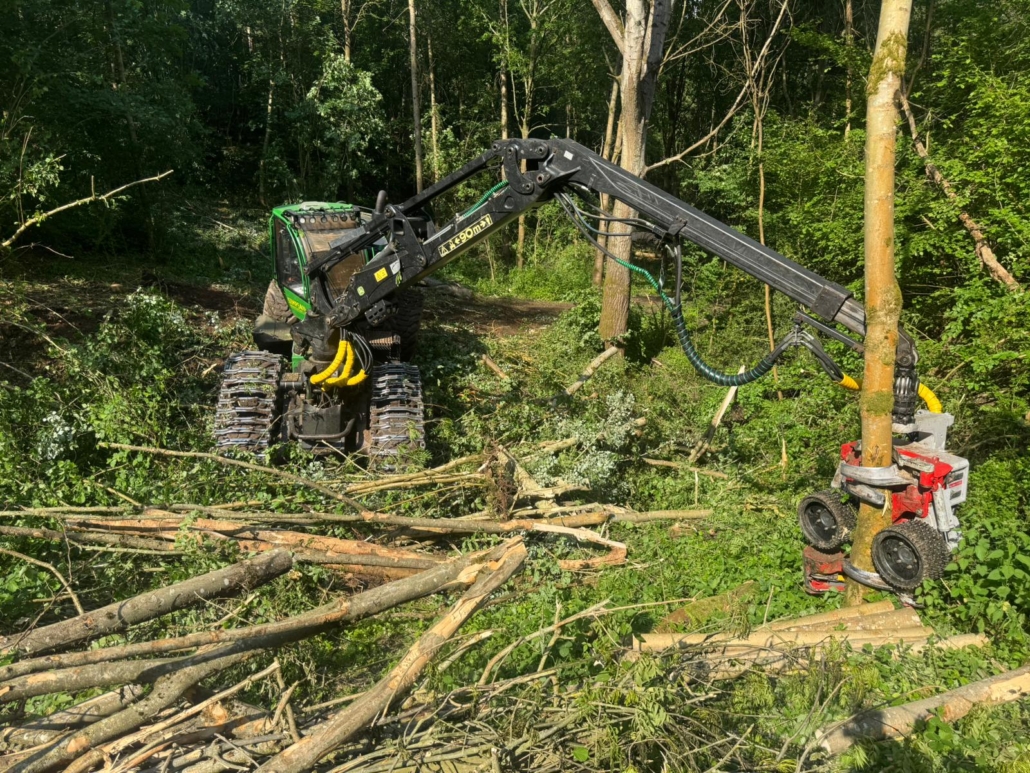
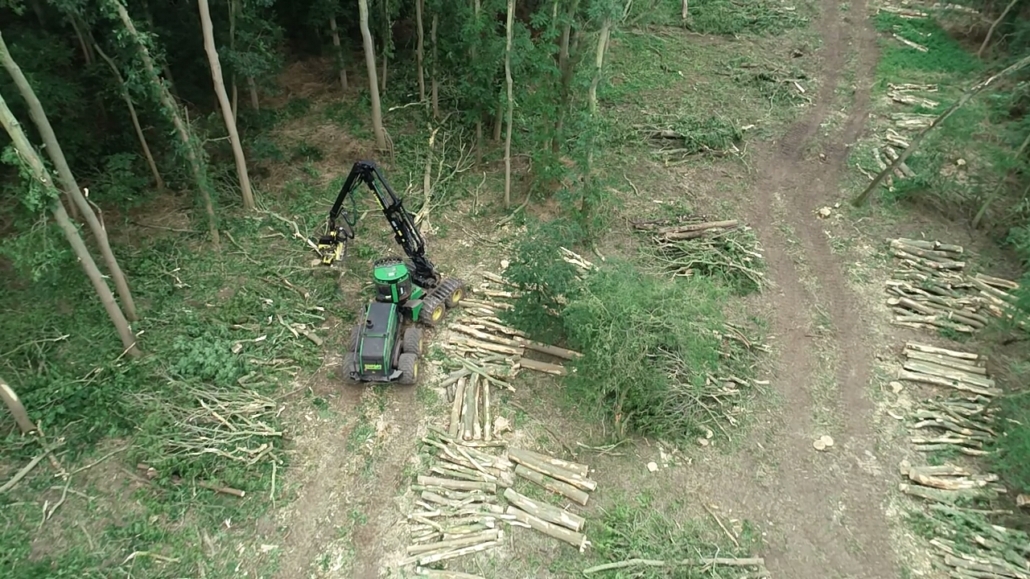
For forestry work, our John Deere harvester and forwarder allow us to mechanically fell, process and extract timber. Our Valtra tractor with timber crane and trailer gives us further capability for moving timber and other material from a wide variety of sites.

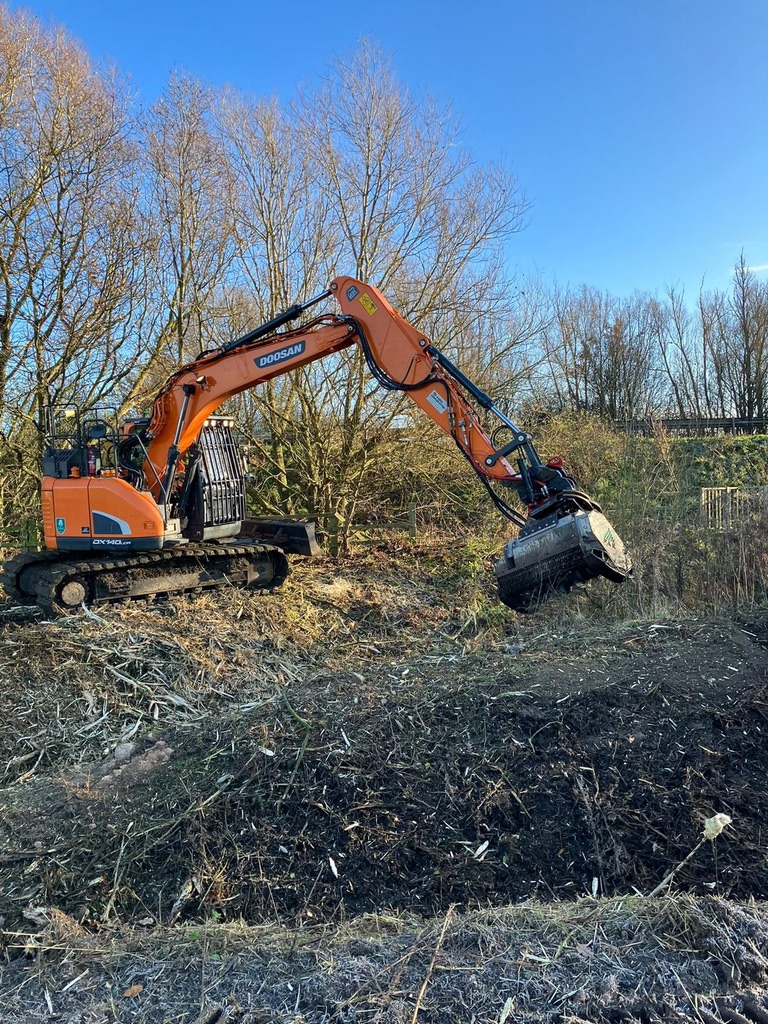
Where large areas need to be cleared, mulching equipment can process vegetation efficiently across the site, making it particularly useful for larger-scale clearance projects.

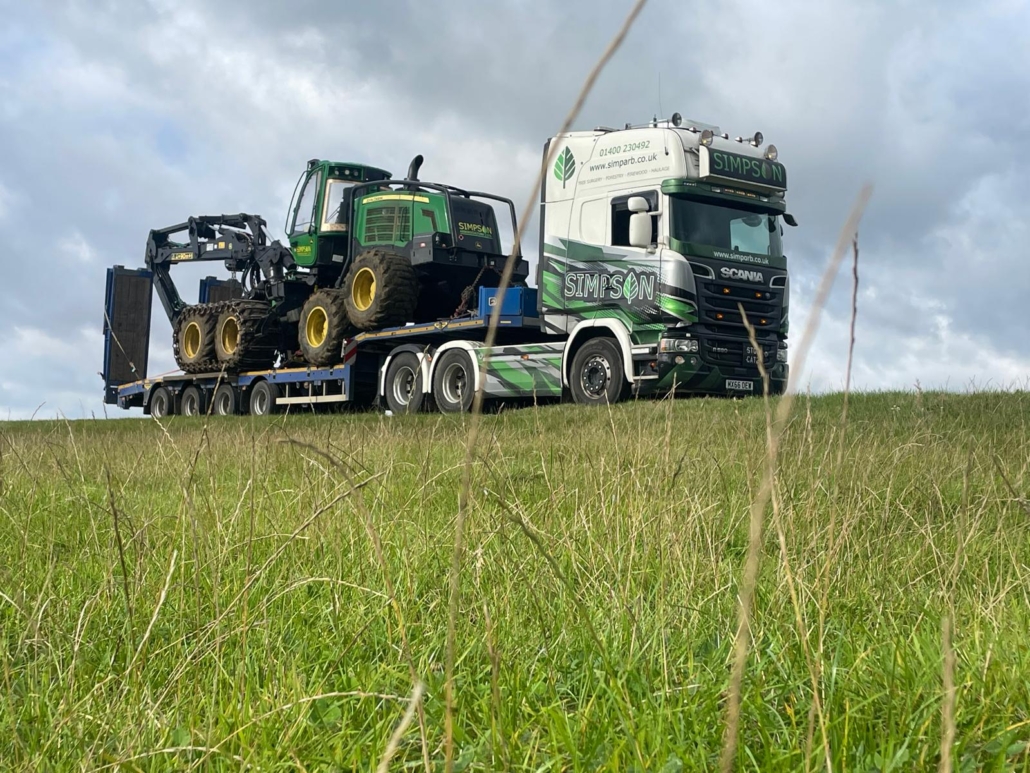
We also operate our own HGV for a range of haulage, enabling us to transport timber arising from domestic, commercial and forestry work.

Together, these capabilities mean we can consider the whole process – not just how a tree will be felled, but how the material will be processed, extracted and transported afterwards.

Machinery isn’t only for large-scale jobs

Heavy machinery might immediately bring forestry or major commercial projects to mind. However, mechanisation can be useful across a much wider range of work.

Depending on the site, we may use machinery on domestic tree work, commercial projects, forestry operations, site clearances, roadside work and sites with challenging terrain or access.

Equally, using machinery doesn’t automatically make it the right choice.

Sometimes climbing and traditional arboricultural techniques remain the safest and most practical solution. On another site, bringing in a MEWP, excavator or specialist forestry equipment could significantly reduce manual handling and make the work much more efficient.

The important part is choosing the method to suit the job.

More than the machines themselves

Our machinery is only one part of our capability.

Getting the most from specialist equipment relies on the knowledge and experience of the people planning the work and operating it. A machine is useful when it solves a problem – whether that’s keeping an arborist away from an unstable tree, processing a high volume of material, working safely on difficult terrain or reducing unnecessary handling.

By combining experienced arborists, skilled machine operators and specialist equipment, we can look at a project as a whole and decide on an approach that makes the best use of the resources available.

That might involve traditional climbing techniques, mechanised tree removal, harvesting and forwarding, crane-fed chipping, mulching, timber haulage – or a combination of several methods.

Ultimately, that’s why we invest in machinery: not simply to have more equipment, but to give our team more options.

More options allow us to plan work around the individual site, reduce unnecessary risk and manual handling, and complete everything from smaller tree surgery jobs to complex commercial and forestry projects safely and efficiently.

Get in touch

If you’re interested in finding out more about what we can do to assist with your next project, you can get in touch via our website. Our team would be happy to discuss your needs and arrange for a free site visit and quotation.

When people think of arboriculture, traditional tree surgery is often the first thing that comes to mind. But for larger commercial sites, forestry operations and complex clearance projects, the requirements can extend far beyond individual tree work.

At Simpson Arboriculture, our capabilities have developed considerably since we were established in 2006. Today, we bring together arboriculture, mechanised tree work, forestry harvesting, vegetation management and large-scale site clearance within one established operation.

Supported by our own specialist machinery, in-house haulage and experienced team, this allows us to undertake projects ranging from individual trees through to substantial, technically demanding commercial works.

Bringing multiple capabilities together

Larger projects can involve several different stages of work. A site clearance project, for example, may require arboricultural work, mechanised felling and processing, vegetation clearance, timber extraction, haulage and the management of resulting materials.

Rather than these elements automatically requiring several different contractors, we can deliver a wide range of services using our own team, machinery and resources.

For our clients, this can make the overall project much simpler to manage. With fewer separate contractors to coordinate, there is clearer responsibility for the work, more straightforward communication and better continuity from one stage of the project to the next.

It also gives us greater control over scheduling, machinery and logistics, helping us to keep work moving efficiently as a project progresses.

More than having the right machinery

Specialist machinery has transformed what can be achieved safely and efficiently within modern arboriculture, forestry and site clearance. However, capability is about much more than simply owning the equipment.

Our investment in machinery has developed alongside the knowledge and experience of our team. Since Simpson Arboriculture was established in 2006, we have steadily expanded the scale and range of work we undertake, building practical experience across arboriculture, forestry and mechanised operations.

This combination of equipment and expertise enables us to select an appropriate approach for each site rather than simply applying the same method to every project.

Our fleet allows us to mechanise work where appropriate, process and handle significant volumes of material, work efficiently across larger areas and manage the movement of timber and other materials as part of the wider operation.

With our own plant and in-house haulage available, we are also less reliant on bringing in external resources for different stages of a project.

From individual trees to large-scale projects

Being able to undertake larger projects does not mean leaving conventional arboriculture behind. Instead, our broader capability has developed from the arboricultural knowledge and experience at the heart of the business.

As an ARB Approved Contractor, we have the people, accreditation, equipment and experience required to deliver professional arboricultural work, while our wider forestry and mechanised capabilities allow us to take that expertise onto considerably larger and more complex sites.

Depending on the requirements of a project, our work can include:

  • Commercial arboriculture and tree surgery
  • Mechanised tree felling and processing
  • Forestry harvesting
  • Vegetation management
  • Large-scale site clearance
  • Timber extraction and handling
  • In-house haulage and transport

Bringing these services together means we can look at a project as a whole, considering how each stage fits into the next and planning the work accordingly.

A well-organised operation from start to finish

For commercial clients, capability is not only about what happens on site. Reliable planning, organisation and communication are just as important, particularly when work involves multiple stages, specialist machinery or other contractors working around the project.

We aim to provide clear communication throughout, from the initial discussions and planning through to completion. Our team works closely with clients to understand the requirements and constraints of each site, organise the necessary resources and keep them informed as the work progresses.

Ultimately, our aim is straightforward: to provide clients with one capable and dependable contractor who can take responsibility for a much wider scope of work.

Over the years, Simpson Arboriculture has grown beyond the capabilities of a conventional tree surgery contractor. By bringing together experienced people, professional accreditation, specialist machinery, haulage and a broad range of services, we are equipped to deliver everything from individual tree works to substantial commercial, forestry and site clearance projects — all within one established operation.

If you have a project coming up and would like to find out more about what we can offer, you can get in touch via our website. Our team would be happy to discuss your requirements and arrange to meet with you to carry out a site visit and quotation.