Roadside tree work can involve considerably more planning than a typical tree surgery job. As well as managing the risks associated with the trees themselves, the team may also need to work around moving traffic, pedestrians, nearby properties, utilities and other site users.
Whether the work involves pruning a single roadside tree or removing multiple trees as part of a larger project, careful planning before work begins is essential.
At Simpson Arboriculture, we undertake roadside tree work ranging from smaller local jobs through to larger commercial projects. Here are some of the main considerations that can go into planning and carrying out this type of work safely and efficiently.
Assessing the Site Before Work Begins
Planning starts before the team arrives on site.
A site visit allows us to assess the trees, access, surrounding environment and any potential hazards that could influence how the work should be carried out.
For roadside work, this might include considering:
- The size, condition and position of the trees
- The type and speed of traffic using the road
- Visibility for approaching vehicles
- Pedestrian routes and public access
- Nearby buildings, boundaries and other structures
- Overhead and underground utilities
- Space available for machinery and vehicles
- How timber, woodchip and other arisings will be removed from site
Understanding these factors helps us determine the safest and most practical method of working before the job begins.
Traffic Management
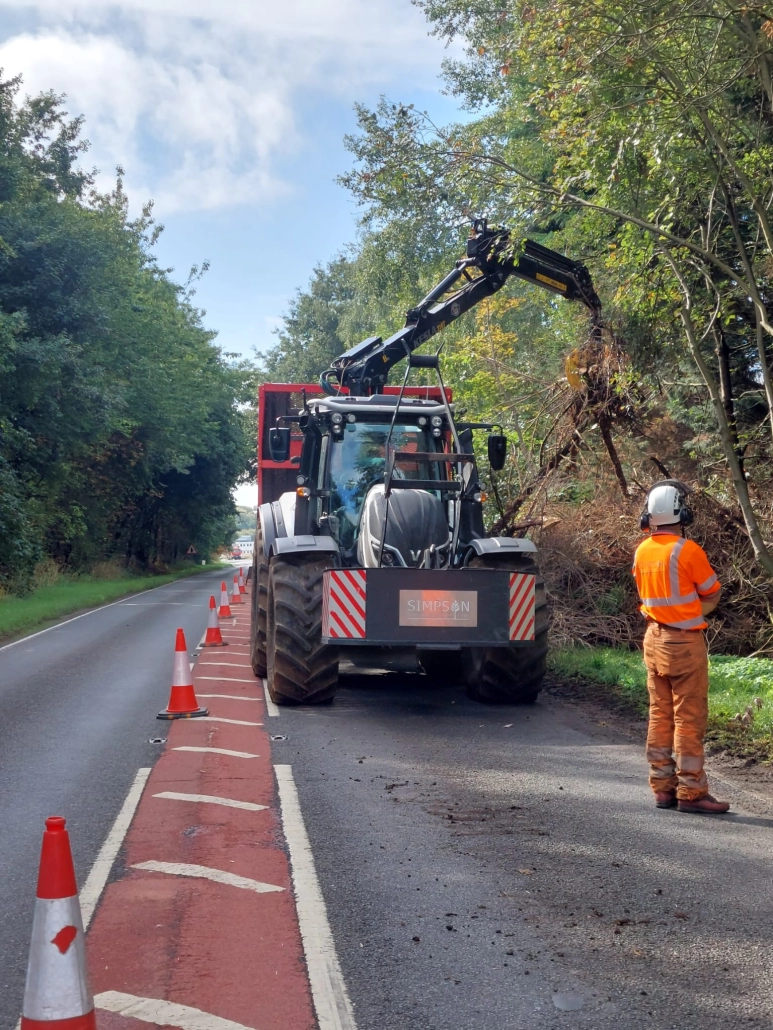
Traffic management can be one of the most important parts of roadside tree work.
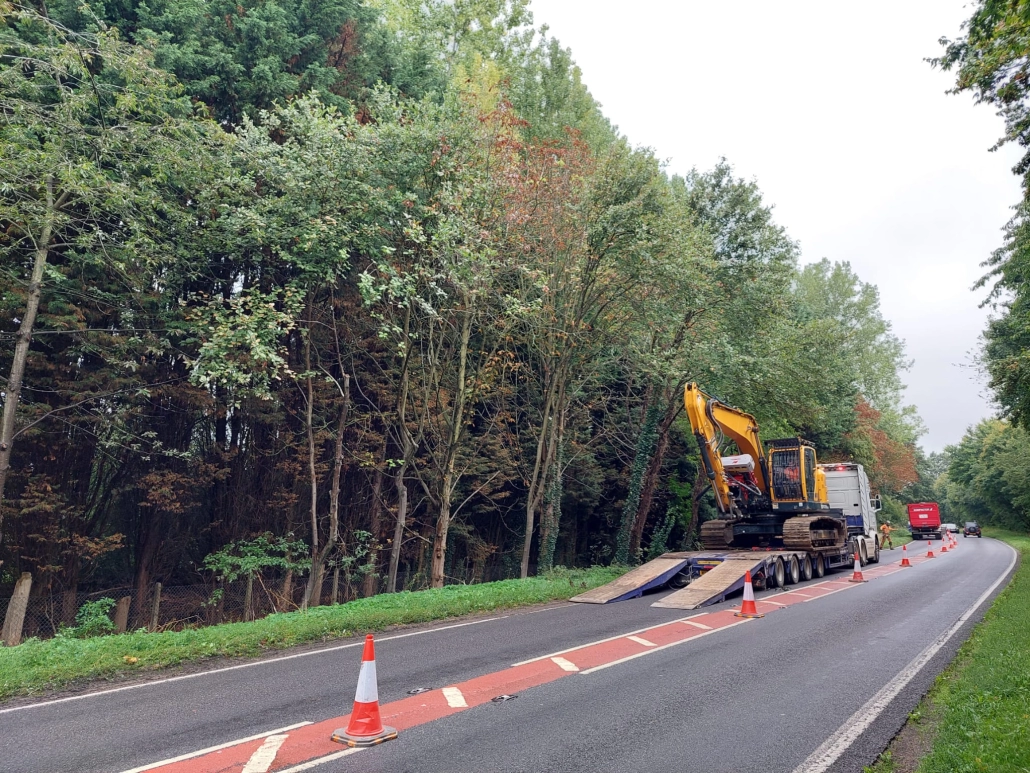
Depending on the location and nature of the project, this may involve anything from managing vehicle movements around the work area to more extensive traffic management arrangements.
The objective is to create enough separation between the tree work and road users while allowing the work to be completed safely.
This needs to be considered alongside the tree work itself. For example, the team may need sufficient space for machinery to operate, timber to be processed and vehicles to enter or leave the site without creating additional hazards.
Planning these arrangements in advance can also help minimise disruption to road users.
Creating Safe Exclusion Zones
Tree work naturally involves falling branches, timber and machinery movements, meaning suitable exclusion zones are essential.
When working beside a road, establishing these areas can be more complicated because the site may be constrained by the carriageway, pavements, properties or other boundaries.
The work method therefore needs to consider where material will be felled or lowered, where machinery will operate and where ground staff can safely work.
Good communication between everyone involved is particularly important, especially where arborists, machine operators, traffic management personnel and other contractors may all be working within the same site.
Managing Pedestrians and Other Site Users
Vehicles are not the only consideration.
Footpaths, public rights of way, entrances to properties, workplaces and other pedestrian routes may pass close to the work area.
Where necessary, pedestrian access may need to be temporarily controlled or redirected so that members of the public cannot enter an active work zone.
On commercial sites, there may also be employees, contractors or delivery vehicles moving around the site. Coordinating the tree work with these activities can form an important part of the overall planning process.
Checking for Utilities
Both overhead and underground services can influence how tree work is carried out.
Overhead power lines are an obvious consideration, but underground electricity, gas, water and telecommunications services may also need to be taken into account, particularly where machinery will be travelling across the site or working close to service routes.
Identifying utilities before work starts allows the team to plan appropriate working distances and choose suitable machinery and methods.
Choosing the Right Machinery
Specialist machinery can make a significant difference on larger roadside projects.
Where site conditions allow, mechanised methods can reduce the amount of manual handling required and allow trees and timber to be controlled and processed efficiently.
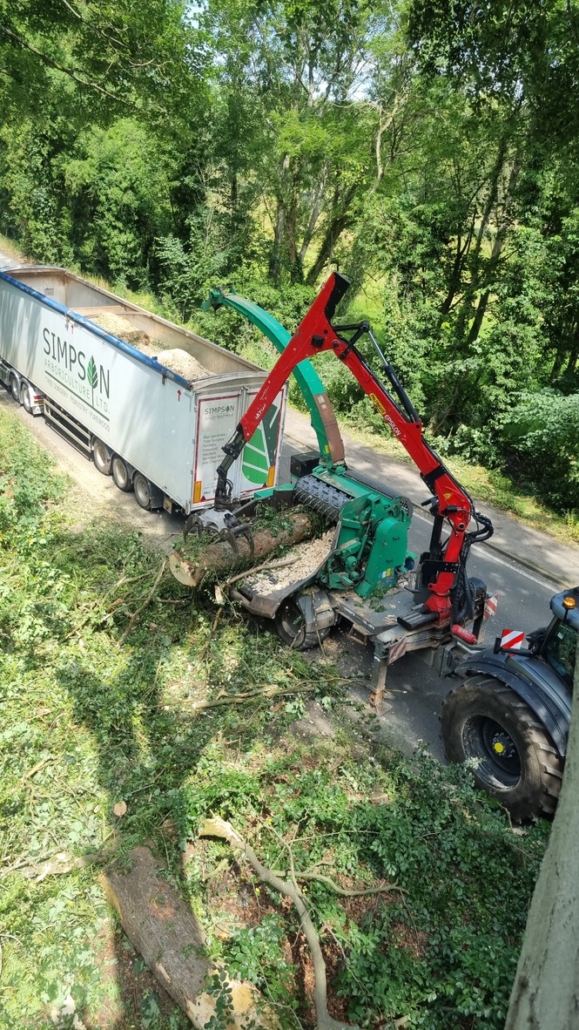
For example, excavators fitted with grapple saws can be used to dismantle or fell suitable trees while maintaining greater control over sections of timber. Crane-fed whole-tree chippers can then process material efficiently, while timber and woodchip can be loaded directly for removal from site.
Using machinery effectively is not simply a case of bringing the largest equipment available. Access, ground conditions, working space, traffic management and surrounding hazards all need to be considered when deciding which machines are appropriate.
Just as importantly, specialist machinery needs experienced operators who understand both the equipment and the arboricultural work being carried out.
Risk Assessments and a Clear Method of Work
Every site presents a different combination of risks.
Before work begins, a site-specific risk assessment helps identify those hazards and establish the control measures required. The team can then be briefed so that everyone understands the planned method of work, exclusion zones, machinery movements and their individual responsibilities.
Conditions can also change once work is underway. Weather, traffic, ground conditions or unexpected site hazards may mean that the original plan needs to be reviewed.
Having experienced people on site who can recognise these changes and adapt the work accordingly is an important part of managing a project safely.
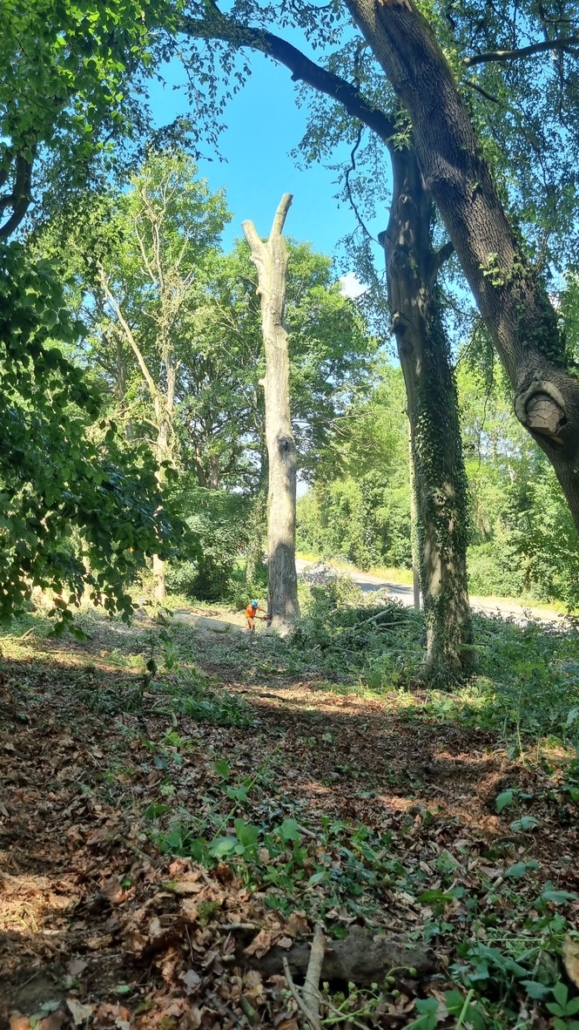
Planning the Whole Operation
For larger roadside projects, tree removal is only one part of the job.
The complete operation may involve traffic management, machinery, felling or dismantling, chipping, timber extraction, loading, haulage and final site clearance.
Planning these stages together can make the project significantly more efficient. Machinery can be positioned where it is needed, timber can be moved without unnecessary handling and vehicles can be coordinated so material does not accumulate within the working area.
Our own machinery and in-house haulage capability means we can manage more of this process directly, helping us maintain better control over how a project progresses from the initial tree work through to the removal of timber, woodchip and other arisings.
Experience Makes a Difference
Roadside tree work demonstrates why arboriculture is about much more than simply cutting trees.
A successful project relies on understanding the site, selecting an appropriate method, coordinating people and machinery and continually managing the risks around the work area.
Projects such as our work at Renishaw Hall in Derbyshire provide practical examples of this type of planning in action, where roadside conditions, machinery, site access and the wider working environment all have to be considered together.
By combining experienced arborists and machine operators with specialist equipment and careful planning, we can undertake roadside tree work ranging from individual trees through to larger and more technically demanding commercial projects.
If you have a tree work project coming up and would like to find out more about what we can offer, you can get in touch via our website. We would be happy to discuss your project and arrange for a site visit.