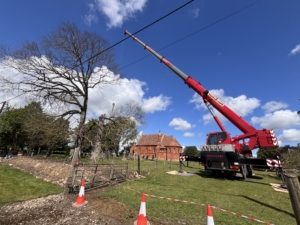
We recently competed a project for roadside tree removals through Robinson Forestry. The job was to removal the marked trees, which had been selected due to their poor condition near to the busy A6135 road near Renishaw Hall, Derbyshire.
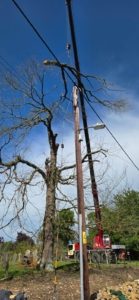
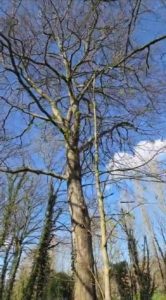
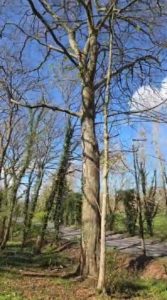
This was a challenging job due to the trees being located on a sloped embankment next to a busy road. The trees were in decline, making their removal necessary for preventing any risk of failure onto the road. There was also a street light in close proximity to the trees.
Jobs of this size and complexity always require careful and detailed planning. Our manager visited the site to view the trees. We then put together a detailed method statement and site-specific risk assessment. This ensured that the approach was as safe and efficient as possible, with different methods being taken into consideration.
The next task in the planning stage was to organise a week-long lane closure for the work to be safely carried out. Traffic lights were planned with a trusted traffic management company to create an exclusion zone for our team and the machinery. Because of the busy nature of the road, this had to be organised well in advance, with the local council notified.
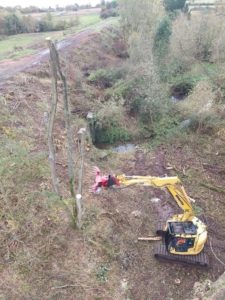
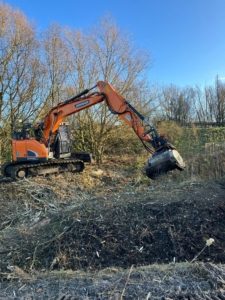
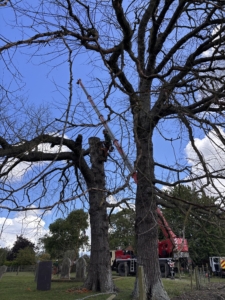
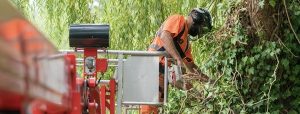
On the day, our team were mostly able to dismantle the trees using the controlled method of the grapple saw fitted to our 360 excavator. The use of machinery in tree work offers huge benefits- it makes the work safer, more time efficient and cost effective. Our excavators are fitted with ROPS (Roll-over protective structure) and FOPS (Falling object protective structure). These are critical safety systems in heavy machinery. They are designed to protect the machine operator from injuries in the case of rollovers or overhead hazards.
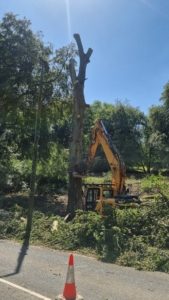
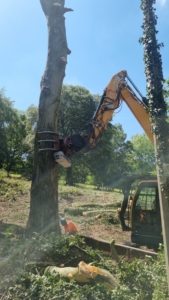
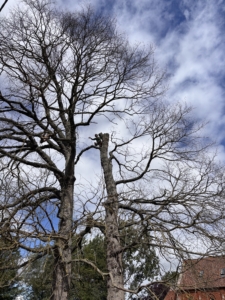
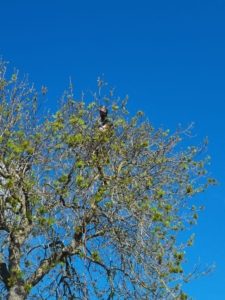
However, several trees were too tall to be reached and dismantled using the machinery. The tallest tree was a beech tree standing at around 28 metres! This tree stood so tall because it was at the bottom of a north facing slope and had to grow to compete for light with the trees on a higher elevation. The crown break stood at around 15 metres with the most dense foliage all on the top and northern side, since the southern side was always in shade. As such, it was growing over the road and over a streetlight. It was impossible to fell at its current size and with its weighting towards the road- it simply wouldn’t fit into the space around it.
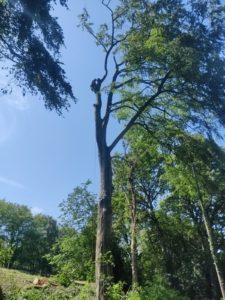
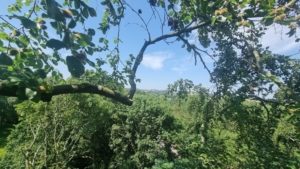
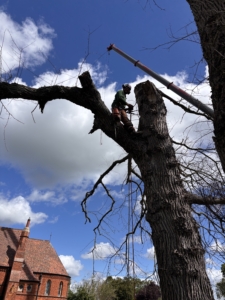
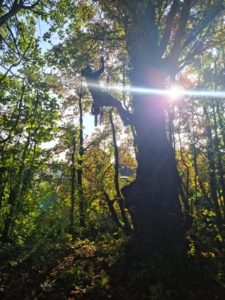
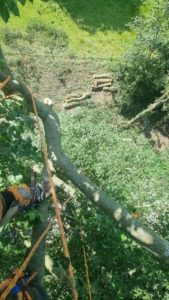
Ben climbed the trees and lowered the limbs down that were over the streetlight, while the traffic was stopped. He was then able to fell larger sections at the stem before felling the remaining large limbs. These were then cut down in longer sections until it was at a height deemed reasonable and safe to fell into the space available.
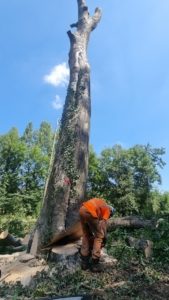
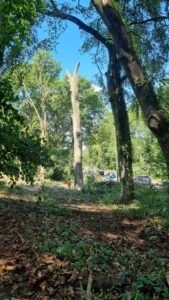
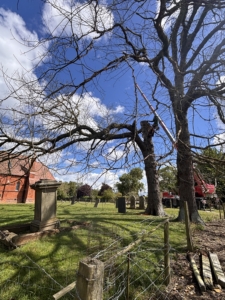
The others consisted of 2 x ash trees and a sycamore. All three were growing in close proximity to a sheep fence. Damaging this would risk the sheep escaping and getting onto the main road. Therefore, they were dismantled as the safest course of action.
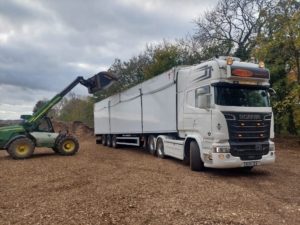
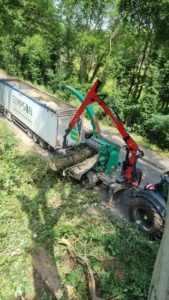
Once on the ground, the brash was chipped using our Jenz crane-fed chipper. This machine is ideal for processing bulky material in large quantities. The chip was processed and fired directly into the walking floor trailer, so it could be removed from site.
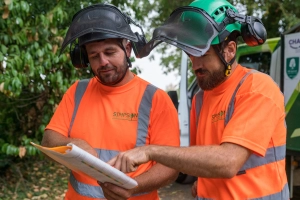
On technically tricky jobs such as this, communication is key. The climber and machine operator used Stihl Comms headsets to communicate throughout. This meant they could carefully co-ordinate the manual and machinery work safely and effectively.
Specialist machinery, arborist and operator experience all came into play to make this job a success. Combined with our experienced lorry driver who removed the timber from site, our team are highly skilled, efficient and have the right equipment to get the job done.
If you have a tree work project coming up and want to find out more about what we can offer, you can get in touch with us via our website. We would be happy to discuss the work and then arrange for a free site visit and quotation.