If you own land with trees on it, you might assume that you are free to remove them whenever you choose. However, in many cases, there are legal restrictions that mean you may need permission before carrying out tree felling or other tree work.

Failing to obtain the correct permissions can result in significant fines and legal complications, so it is always worth checking before any work begins.

Tree Preservation Orders (TPOs)

One of the most common restrictions affecting trees on private land is a Tree Preservation Order (TPO).

A TPO is made by a local planning authority to protect trees that provide significant public amenity value. If a tree is protected by a TPO, you will generally need permission from the council before carrying out work. This may include:

  • Pruning
  • Crown reduction
  • Crown lifting
  • Felling

Carrying out unauthorised work on a protected tree can lead to prosecution and substantial fines.

Are you unsure whether a tree is protected by a TPO? Your local council should be able to advise you. At Simpson Arboriculture, this is something we always check before arranging any tree work.
Trees within conservation areas

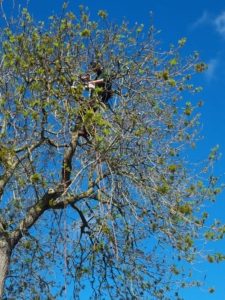
Even if a tree is not covered by a TPO, it may still be protected if it is located within a Conservation Area.

In most cases, if you wish to carry out work on a tree within a Conservation Area, you must give the local authority six weeks’ written notice before work begins. This is usually via an Application for Tree Works form which should be available on a council’s website. This allows the council time to assess the tree and decide whether further protection is required.

There are some exemptions such as if the tree is below a certain size or you are removing deadwood only, but it is always advisable to seek professional guidance before proceeding.
Forestry felling licences

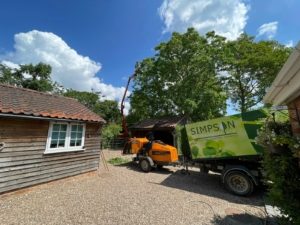
For larger-scale tree removal, particularly on woodland or forestry sites, a felling licence may be required from the Forestry Commission.

In England, a licence is generally needed if more than 5 cubic metres of timber will be felled in a calendar quarter, although there are various exemptions depending on the circumstances.

Felling trees without the appropriate licence can result in enforcement action and a requirement to restock the land.

Planning conditions and development sites

Trees can also be protected through planning conditions attached to a property or development site.

If you are planning construction work, extensions, access routes or landscaping projects, there may be restrictions on tree removal as part of the planning approval.

It is important to check any planning conditions before arranging tree work.
Dead or dangerous trees

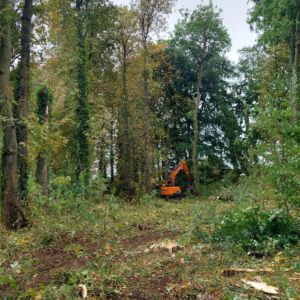
There are situations where permission may not be required, such as when a tree is dead or presents an immediate risk to public safety.

However, evidence may be needed to demonstrate the condition of the tree, and it is often sensible to document the issue with photographs and seek professional advice before work takes place.

Where protected trees are involved, local authorities may still expect to be notified. This is usually through a 5 day notice. As with TPO and conservation area applications, this is something that we can submit on behalf of our customers if required.

Boundary and ownership considerations

Before arranging any tree work, it is also important to confirm ownership.

Trees growing on a boundary may be jointly owned, while trees near neighbouring properties can sometimes create disputes if removed without discussion. Checking ownership and communicating with affected neighbours can help avoid unnecessary problems. For more information on this, please see our blog: Who is Responsible for Trees on Boundary Lines? 

How can we help?

Owning a tree does not automatically give you unrestricted rights to remove it. Tree Preservation Orders, Conservation Areas, felling licence requirements and planning conditions can all affect what work is permitted.

At Simpson Arboriculture, we can help customers navigate the regulations surrounding tree work. If you are considering having any tree work carried out and are unsure about the legal requirements, our team will be happy to provide advice and guidance before any work takes place. We regularly submit applications on behalf of our customers and oversee the whole process.

Get in touch

If you are interested in having tree work carried out but you are not sure where to start, you can get in touch with our friendly team via our website. Seeking professional advice from an experienced tree surgery company such as Simpson Arboriculture at the outset can help ensure the work is carried out safely, legally and with complete peace of mind.
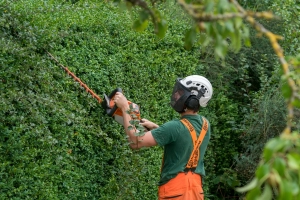
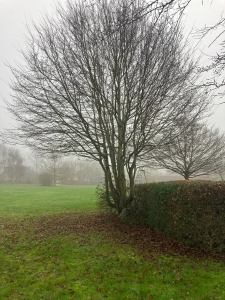
One of the questions we are often asked is whether tree work can be carried out at any time of year. The simple answer is yes – tree surgery can be undertaken throughout the year, and our team works all year round in all seasons.

However, while tree work is possible at any time, there are certain factors that need to be considered when deciding on the best time to carry out specific jobs. These include bird nesting season, tree species, weather conditions and the objectives of the work.

Bird nesting season

One of the most important considerations when planning tree work is the bird nesting season, which generally runs from March to August in the UK.

Many birds choose trees, hedges and shrubs as nesting sites during the spring and summer months. Under wildlife legislation, active bird nests are protected, meaning work that could disturb nesting birds must be carefully managed.

This does not mean that all tree work stops during nesting season. Trees can still be inspected and, in many cases, work can proceed safely. Before any work is carried out, we assess the tree and surrounding area for signs of nesting activity. If an active nest is found, we will advise on the best course of action, which may include postponing work until the birds have fledged.

Different trees, different timing

The ideal time for tree work can vary depending on the species and the type of work required.

Some trees respond better to pruning at certain times of year. For example:

  • Certain species are best pruned during their dormant season in autumn or winter.
  • Some trees, such as birch, maple and walnut, can produce significant sap flow if pruned at the wrong time of year.
  • Fruit trees often have specific pruning windows depending on the desired outcome.
  • Deadwood removal and safety-related work can usually be carried out throughout the year.

Every tree is different, which is why professional advice is important when planning tree maintenance.

Winter tree work

Winter is often a popular time for tree surgery. Deciduous trees have lost their leaves, making it easier to see the tree’s structure and identify defects or areas requiring attention.

Ground conditions can sometimes be more favourable for access, particularly in gardens and woodland areas, and there is generally less impact on wildlife activity.

Summer tree work

Summer can also be an excellent time for tree work, particularly when reducing shading, managing growth or addressing concerns that become more noticeable when trees are in full leaf.

The presence of leaves allows arborists to assess the tree’s health and vitality more easily. However, additional care must be taken to account for nesting birds and periods of hot, dry weather.

Summer pruning of tree

Emergency tree work

Some situations simply cannot wait for the ideal season.

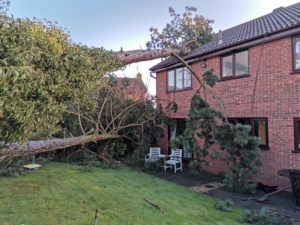
Storm damage, broken branches, diseased trees or trees that pose a risk to people or property may require urgent attention regardless of the time of year. In these cases, safety is always the priority, while still ensuring any wildlife considerations are taken into account wherever possible.

When is the best time for tree work?

There is no single answer that applies to every tree. The best time depends on the species, the condition of the tree and the reason the work is being carried out.

At Simpson Arboriculture, we carry out tree work throughout the year and can advise on the most suitable timing for your particular tree and requirements. Whether you’re looking to improve the health of a tree, reduce its size, remove dangerous branches or undertake larger-scale management work, we’ll recommend the best approach while considering both tree health and wildlife protection.

If you’re unsure when your tree work should be carried out, get in touch with our team for professional advice and a free quotation.

One of the most common questions we get asked after carrying out tree work is: “What happens to all the branches, logs and woodchip?”

The simple answer is that nothing goes to waste.

At Simpson Arboriculture, we operate a 100% recycling policy for all timber and green waste generated through our tree surgery, forestry and arboricultural work. Every load of wood and woodchip is processed and put to good use, ensuring that valuable natural resources are never unnecessarily sent to landfill.

Woodchip: a valuable resource

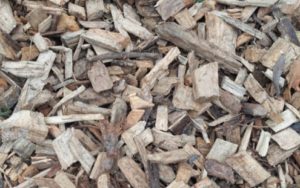
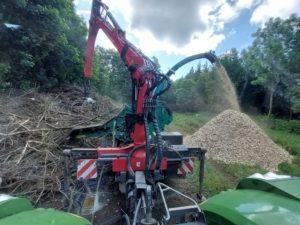
When we carry out tree work, smaller branches and brash are processed through our woodchippers, producing woodchip.

Rather than disposing of this material, we recycle it in several ways.

A significant proportion of our woodchip is dried and used as biomass fuel in our own boilers. These boilers provide renewable heat for our firewood drying operations.

We also supply woodchip to other biomass users who utilise it as a sustainable fuel source.

In addition, woodchip is popular with customers for:

  • Garden mulch and landscaping projects
  • Weed suppression around planting areas
  • Chicken runs and poultry enclosures
  • Equestrian areas and horse paddocks
  • Pathways and outdoor surfaces

This means that even the smallest branches from a tree can continue to provide value long after the work has been completed.

From waste wood to firewood

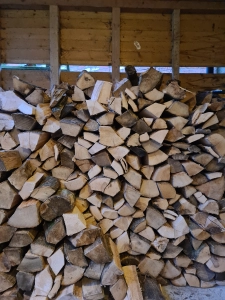
Larger sections of timber are carefully processed into firewood logs.

Rather than being discarded, suitable timber is processed and dried to create high-quality firewood for our log customers. This allows us to make full use of the material generated through tree work while providing a sustainable heating fuel.

Fuel for our kiln-drying process

Not all timber is suitable for producing firewood logs, but that doesn’t mean it goes to waste.

Lower-grade timber and offcuts are used as fuel within our biomass heating system. The heat generated powers our log drying kiln, which dries our firewood to the high standards our customers expect.

This creates a highly efficient circular process, where material generated through tree work helps to fuel the production of ready-to-burn firewood.

A truly circular approach

Our recycling process ensures that every part of the tree is utilised:

  • Woodchip is used for biomass fuel, landscaping, poultry and equestrian applications.
  • Quality timber is processed into firewood logs.
  • Lower-grade timber and offcuts are used as fuel for our biomass boilers.
  • The heat generated helps dry our firewood in our kiln.

As a result, we achieve 100% recycling of the timber and green waste produced through our operations.

Jenz Hem woodchipper

Sustainable tree care

Responsible tree management doesn’t end when the work is complete.

By investing in biomass heating, firewood production and sustainable recycling methods, we’re able to ensure that every tree we process continues to provide value. Whether it’s heating homes, producing renewable energy, improving gardens or supporting local businesses, the material from tree work can provide another use.

When you choose Simpson Arboriculture, you can be confident that your tree waste won’t be wasted at all. Instead, it becomes part of a sustainable recycling process that makes the most of every branch, log and woodchip produced.

Once a tree has been removed, you’re often left with the stump. While this may not seem like a problem at first, many homeowners soon find that an old stump can get in the way of mowing, landscaping projects, replanting, or simply enjoying their garden.

If you’re wondering how to get rid of a tree stump, there are several options available. The best solution depends on factors such as the stump’s size, location, accessibility and your plans for the area.

Why remove a tree stump?

There are many reasons why people choose to remove tree stumps, including:

  • Improving the appearance of their garden.
  • Eliminating trip hazards.
  • Making lawn maintenance easier.
  • Preventing regrowth from certain tree species.
  • Creating space for landscaping, patios, driveways or new planting.
  • Freeing up valuable garden space.

Option 1: Leave the stump to decay naturally

The simplest option is to leave the stump in place and allow it to decompose naturally.

Some property owners choose to use old stumps as wildlife habitats, natural garden features or rustic planters. However, depending on the tree species and stump size, natural decay can take many years.

If the stump is likely to cause inconvenience or you have plans for the area, you may wish to consider a more proactive approach.

Option 2: Dig out the stump

Small stumps can sometimes be removed by hand using spades, mattocks and other digging tools.

However, larger stumps often have extensive root systems that make removal physically demanding and time-consuming. Excavating a mature stump can also cause significant disturbance to lawns, borders and surrounding areas.

For most larger stumps, professional stump grinding is usually a more practical solution.

Option 3: Professional stump grinding

Stump grinding is the most effective way to remove a tree stump in many situations.

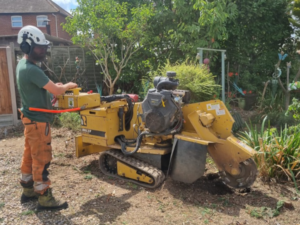
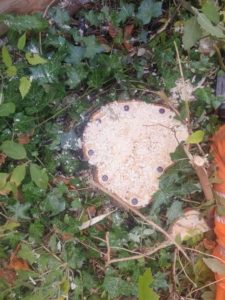
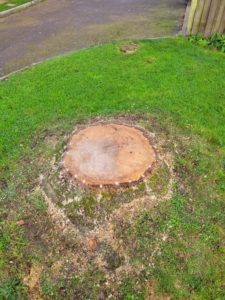
Using specialist machinery, the stump is ground down below ground level, allowing the area to be re-turfed, replanted or incorporated into future landscaping projects. Unlike full excavation, stump grinding causes minimal disruption to the surrounding area.

At Simpson Arboriculture, we offer professional stump removal and stump grinding services across Lincolnshire and the surrounding areas. Whether you have a single garden stump or multiple large stumps on a commercial site, we have the equipment and expertise to carry out the work safely and efficiently.

Our stump grinding equipment

To suit different types of projects, we operate two specialist stump grinders.

Rayco RG37T stump grinder

Our Rayco RG37T stump grinder is ideal for most domestic stump grinding work. Its compact design allows it to access many residential gardens while providing the power needed to remove stumps quickly and effectively.

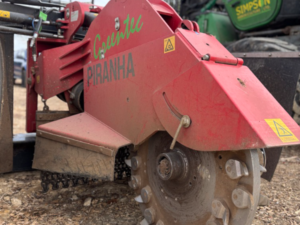
Greentec Piranha stump grinder

For larger-scale stump removal projects, we utilise our Greentec Piranha stump grinder. This powerful machine is particularly suited to removing large stumps or multiple stumps on commercial sites, development land, woodland and forestry projects.

Is my stump suitable for grinding?

Stump grinding machines require suitable access to reach the stump safely.

Stump grinding is generally possible where:

  • There is level access to the stump.
  • Machinery can be wheeled directly to the work area.
  • Access routes and gateways are wide enough for the equipment.
  • The stump is not excessively close to walls, fences, buildings or other structures.

Unfortunately, stump grinding may not be suitable where:

  • Access is only available via steps.
  • Narrow access points prevent machinery from reaching the stump.
  • The stump is extremely close to walls, fences, foundations or underground services.

If you’re unsure whether your stump can be ground out, our team can assess the site and advise on the available options.

Option 4: Eco plugs

In situations where stump grinding is not practical, eco plugging can provide an effective and affordable alternative.

Eco plugs contain a measured dose of herbicide that is inserted directly into the stump. Once installed, they prevent regrowth and gradually kill the remaining root system.

Unlike stump grinding, eco plugging does not physically remove the stump. Instead, the stump is left to decompose naturally over time while preventing the tree from producing new shoots.

Eco plugging can be particularly beneficial where:

  • Stump grinding machinery cannot access the site.
  • Access is restricted by steps or narrow pathways.
  • The stump is located close to walls, fences or buildings.
  • A lower-cost alternative is preferred.
  • Multiple stumps require treatment across larger areas of woodland or forestry.

For inaccessible stumps, eco plugging can often provide a practical and economical solution.

Can I plant another tree in the same spot?

Because stump grinding leaves some of the root system underground, it is usually advisable to plant the replacement tree slightly offset from the original location.

If you’re planning to replant, our team can advise on the most suitable approach during your quotation.

Free stump removal quotations

If you have an unwanted tree stump and would like professional advice, Simpson Arboriculture offers free quotations for stump grinding, stump removal and eco plugging services.

We’ll assess the size of the stump, site access and your future plans for the area before recommending the most suitable solution.

Whether you need a single garden stump removed or multiple stumps treated across a larger site, our experienced team at Simpson Arboriculture is here to help. For more information, please visit the Stump Treatment page on our website. There’s an option to complete a form with your stump details, so we can provide you with a quotation.

Trees are an important part of our gardens, parks and landscapes. They provide shade, privacy, wildlife habitat and can add significant value to a property. However, like any living organism, trees can develop problems that may make them unsafe.

A dangerous tree does not always look obviously unhealthy. In some cases, a tree can appear perfectly normal while hidden defects weaken its structure. Understanding the warning signs can help you identify potential issues before they become a serious risk.

What makes a tree dangerous?

A tree may be considered dangerous when it has a higher likelihood of failure and could cause injury or damage if it falls or loses branches.

The level of risk depends on several factors, including:

  • The condition of the tree
  • The size of the tree or branches
  • The likelihood of failure
  • Nearby targets such as buildings, vehicles, roads or footpaths
  • Weather conditions and exposure to strong winds

Not every defect means a tree is dangerous, but certain signs should never be ignored.

Common signs that a tree may be dangerous

Dead or dying branches

One of the most obvious warning signs is the presence of dead branches, particularly large limbs high in the canopy.

Dead wood can become brittle and may fall without warning, especially during windy weather. If you notice branches with no leaves during the growing season, peeling bark, or limbs that appear dry and lifeless, it may be time for a professional inspection.

Cracks in the trunk or major limbs

Visible cracks can indicate structural weakness within the tree.

While some cracks are superficial, others may extend deep into the wood and affect the tree’s ability to support its own weight. Large splits or cracks should always be assessed by a qualified arborist.

Fungal growth

The presence of fungi on or around a tree can sometimes indicate internal decay.

Common examples include bracket fungi growing from the trunk or large roots. These fungi may suggest that parts of the tree are rotting internally, potentially reducing its structural strength.

Not all fungal growth is a cause for alarm, but it is worth seeking professional advice if you notice mushrooms or brackets appearing on a tree.

Leaning trees

Many trees naturally grow at an angle and remain perfectly stable for decades.

However, a tree that has recently started leaning, or one that appears to be lifting soil around its base, may indicate root failure or instability.

Sudden changes in a tree’s position should be investigated as soon as possible.

Cavities and hollow areas

Hollows can provide valuable habitat for wildlife, but they can also reduce the structural integrity of a tree.

The significance depends on the size and location of the cavity, as well as the amount of sound wood remaining. A professional assessment can determine whether the tree remains safe to retain.

Decay around the base

The root system is essential for keeping a tree stable.

Signs of decay around the base of the trunk, exposed roots, or areas of soft, crumbling wood may indicate a loss of structural support. Problems below ground often go unnoticed until more obvious symptoms appear.

Excessive dead leaves or sparse growth

If a tree shows poor leaf coverage, unusually small leaves, premature leaf drop, or significant dieback in the canopy, it may be under stress or suffering from disease.

While these symptoms do not automatically make a tree dangerous, they can indicate underlying health issues that warrant investigation.

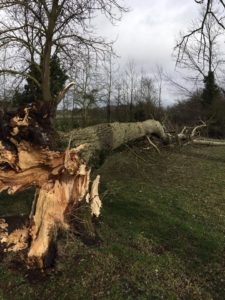
Storm damage and tree safety

Following strong winds or storms, it is advisable to inspect trees for:

  • Broken or hanging branches
  • Fresh cracks in the trunk
  • Leaning stems
  • Damaged roots
  • Split branch unions

Some damage may not be immediately visible from the ground, which is why a professional assessment is often recommended after severe weather.

Can I assess a tree myself?

Property owners can carry out basic visual checks, but many structural defects are not obvious without specialist knowledge and equipment.

Factors such as internal decay, root problems and hidden weaknesses often require a trained arborist to identify accurately.

If you are unsure about the condition of a tree, it is always better to seek professional advice rather than wait until a problem develops.

When should I contact a tree surgeon?

You should consider arranging an inspection if:

  • Large branches have died or fallen
  • The tree has developed a noticeable lean
  • You can see significant cracks or cavities
  • Fungi are growing on the trunk or around the base
  • The tree is close to buildings, roads or public areas
  • You have concerns following a storm

A qualified arborist such as our team at Simpson Arboriculture can assess the condition of the tree, identify any risks and recommend the most appropriate course of action, whether that involves monitoring, pruning, bracing or, in some cases, removal.

Final thoughts

Most trees are far safer than people assume and provide enormous benefits to our environment and properties. However, like any living structure, they can develop defects over time.

Regular inspections and early intervention can help prevent problems, protect people and property, and often allow valuable trees to be retained safely for many years to come.

If you are concerned about the condition of a tree on your property, seeking professional advice can provide peace of mind and help you make an informed decision. At Simpson Arboriculture, we offer free quotations. To arrange your quote, you can get in touch with us via our website.